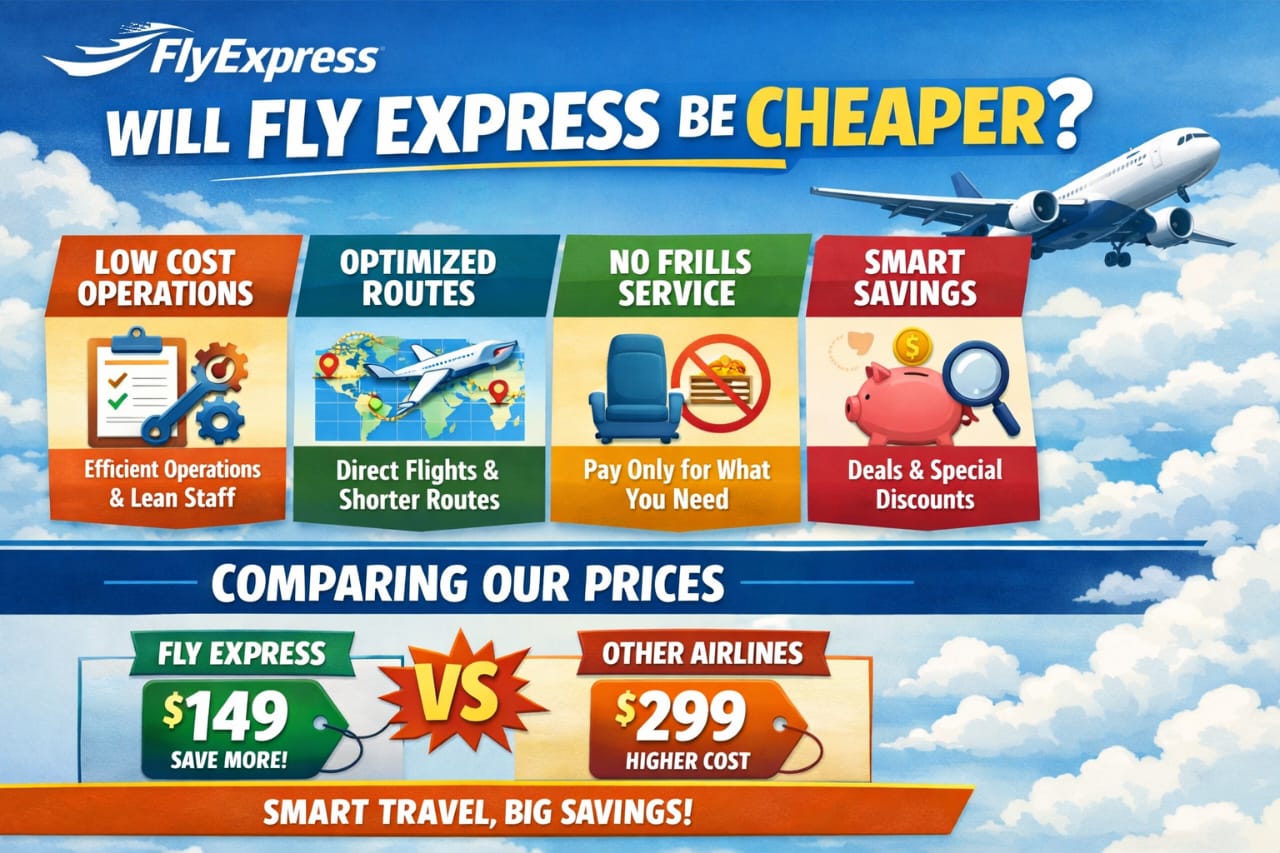
Will Fly Express Be Cheaper?
Why Everyone Is Asking “Will Fly Express Be Cheaper?”
As India prepares to welcome Fly Express, one question dominates Google searches, aviation forums, and social media discussions: Will Fly Express be cheaper than existing airlines?
With rising airfares, shrinking seat availability on popular routes, and frequent complaints about surge pricing, Indian travelers are actively looking for budget-friendly alternatives. Fly Express enters the market at a time when cost sensitivity is at its peak—making its pricing strategy crucial not only for passengers but also for the future shape of Indian aviation.
This article explores Fly Express’s pricing strategy, compares it with established low-cost carriers, analyzes route economics, and answers the most common passenger questions—helping you understand whether Fly Express be cheaper truly or just competitively priced.
Pricing Strategy: Will Fly Express Be Cheaper?
The pricing strategy of Fly Express is expected to follow a pure ultra-low-cost carrier (ULCC) model, designed to attract price-conscious travelers who value affordability over frills.
Unlike traditional low-cost airlines that bundle limited services, Fly Express is likely to unbundle almost everything—from seat selection to baggage—allowing passengers to pay only for what they use.
Core Principles Behind Fly Express Pricing:
| Strategy Element | Expected Approach |
|---|---|
| Base Fare | Extremely low entry fares |
| Add-ons | Paid separately (bags, meals, seats) |
| Fleet | Single aircraft type for cost control |
| Routes | High-demand, short-to-medium haul |
| Distribution | Direct online sales to cut commissions |
This model has worked globally for airlines like Ryanair and AirAsia, and Fly Express appears ready to replicate it for the Indian market.
Why Fly Express Has Room to Offer Cheaper Fares ?
1. Late Entry Advantage –
Fly Express benefits from entering the market after demand patterns are already well-defined. This allows it to:
- Avoid risky routes
- Focus on consistently high-load sectors
- Optimize aircraft utilization from day one
2. Lower Fixed Costs –
As a new airline, Fly Express does not carry:
- Legacy debt
- Expensive long-term aircraft leases
- Overstaffed operational structures
Lower fixed costs give Fly Express pricing flexibility, especially during the launch phase.
Comparison: Will Fly Express Be Cheaper Than Other Indian Airlines?
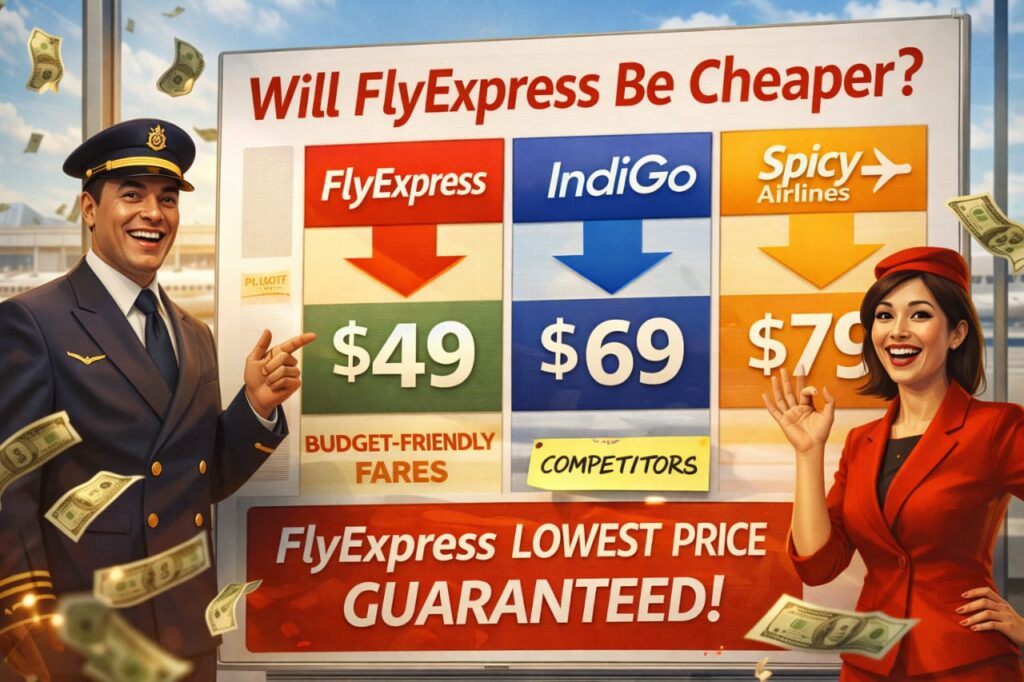
Fare Comparison (Expected Entry-Level Pricing) –
| Airline | Typical Base Fare (₹) | Baggage Included | Meals Included |
|---|---|---|---|
| Fly Express | 1,999 – 2,499 | ❌ | ❌ |
| IndiGo | 2,800 – 3,500 | ✅ | ❌ |
| Akasa Air | 2,700 – 3,400 | ❌ | ❌ |
| Air India Express | 3,000 – 4,000 | ✅ | ❌ |
| Vistara | 4,500+ | ✅ | ✅ |
Key Insight:
Fly Express may offer the lowest advertised fares, but the final price depends on add-ons.
Visual Pricing Trend (Illustrative Graph):
Average Entry Fare (₹)

5000 |            ██████████ Vistara
4000 |        ████████ Air India Express
3000 |    ███████ IndiGo / Akasa
2000 | █████ Fly Express
1000 |
This graph illustrates expected relative pricing, not official fare sheets.
Route Strategy: Where Fly Express Can Be the Cheapest ?
Fly Express is likely to focus on high-density, short-haul routes, where cost efficiency is highest.
Ideal Routes for Low Pricing –
- Delhi ↔ Jaipur
- Mumbai ↔ Ahmedabad
- Bengaluru ↔ Hyderabad
- Chennai ↔ Coimbatore
- Delhi ↔ Lucknow
Short flights reduce fuel burn, crew costs, and turnaround times—allowing Fly Express to undercut competitors consistently on these sectors.
Dynamic Pricing: Will Fly Express Always Be Cheaper?
The answer is no—and that’s important to understand.
Fly Express will almost certainly use dynamic pricing algorithms, meaning fares will fluctuate based on:
- Demand
- Booking window
- Seat availability
- Festival or holiday travel
Pricing Behavior Over Time –
| Booking Time | Expected Price Level |
|---|---|
| 30–45 days before | Cheapest |
| 15–30 days | Moderate |
| 7–14 days | Higher |
| Last-minute | Often expensive |
Takeaway:
Fly Express will be cheapest when booked early, not necessarily at the last moment.
Ancillary Revenue: The Hidden Side of Cheap Tickets
What You’ll Likely Pay Extra For ?
- Checked baggage
- Cabin baggage beyond basic allowance
- Seat selection
- Priority boarding
- In-flight food and beverages
This means the headline fare may look cheap, but the final ticket cost can rise depending on passenger needs.
Sample Fare Breakdown –
| Component | Price (₹) |
|---|---|
| Base Fare | 1,999 |
| Checked Bag | 600 |
| Seat Selection | 300 |
| Meal | 350 |
| Total | 3,249 |
Still competitive—but no longer “ultra-cheap.”
Comparison: Fly Express vs IndiGo Pricing Philosophy
| Factor | Fly Express | IndiGo |
|---|---|---|
| Base Fare | Lower | Moderate |
| Add-ons | Aggressive | Balanced |
| Brand Trust | New | Established |
| Network | Limited (initially) | Pan-India |
| Ideal Passenger | Budget-first | Reliability-first |
Fly Express targets price hunters, while IndiGo appeals to consistency seekers.
Impact on Indian Airfare Market:
Will Fly Express Force Price Wars?
Yes—especially on overlapping routes.
- Competitors may introduce flash sales
- Promotional fares may increase
- Off-peak travel becomes cheaper
However, sustained price wars are unlikely, as airlines must remain profitable in a fuel-sensitive market.
Consumer Perspective: Who Benefits the Most?
Fly Express Is Ideal For:
- Students
- Budget tourists
- Short-haul business travelers
- Backpackers
- Price-sensitive families
Fly Express May Not Suit:
- Passengers needing flexibility
- Travelers carrying heavy baggage
- Premium experience seekers
Frequently Asked Questions (Q&A):
Q1: Will Fly Express be cheaper than IndiGo?
Yes, on base fares.
However, the final price may match or exceed IndiGo once add-ons are included.
Q2: Will Fly Express offer promotional launch fares?
Highly likely. New airlines typically release limited-time introductory fares to build load factors and brand awareness.
Q3: Is Fly Express following an ultra-low-cost model?
Yes. Everything suggests a ULCC pricing strategy focused on unbundling services and maximizing ancillary revenue.
Q4: Will Fly Express be cheaper on international routes?
On short international sectors (South Asia, Middle East), Fly Express may undercut competitors—especially for no-frills travel.
Q5: Are cheaper fares sustainable long term?
Only on select routes and during off-peak seasons. Fuel prices, airport charges, and competition will influence sustainability.
Risks to the “Cheapest Airline” Promise:
While Fly Express aims to be cheaper, several factors could limit this advantage:
- Rising aviation turbine fuel (ATF) costs
- Airport fee hikes
- Currency fluctuations
- Regulatory changes
New airlines often start cheap—but maintaining that edge is the real challenge.
Pricing Strategy of Fly Express:
Fly Express employs a pricing strategy that focuses on providing value while being competitive within the marketplace. This is achieved through:
- Dynamic Pricing: Adjusting rates based on demand, seasonality, and competitors’ pricing.
- Flat Rate Shipping: Providing customers with simple, flat-rate options for standard shipping, which simplifies the decision-making process.
- Transparent Pricing: Clearly outlining costs and any additional fees associated with shipping.
Expert Verdict: Will Fly Express Be Cheaper?
Short Answer: Yes, but with conditions.
Fly Express is likely to offer:
- The lowest base fares in India
- Strong competition on short routes
- Attractive pricing for early bookers
But travelers must remember:
“Cheapest ticket” does not always mean “cheapest journey.”
Smart booking, minimal baggage, and flexibility will unlock the true value of Fly Express fares.
Final Thoughts: Should You Wait for Fly Express?
If price is your top priority, Fly Express is worth watching closely. Its pricing strategy could reshape how Indians book flights—especially for short-distance travel.
As competition heats up, one thing is certain:
Passengers stand to gain the most.
About the Author