
Profitable Solar Business Ideas in India 2025 | Top 10 Ventures to Start
India’s journey towards a sustainable future is being powered by the sun. With ambitious government targets aiming for 500 GW of renewable energy capacity by 2030 and a current solar industry valued at over ₹2.4 lakh crore, the sector is not just green—it’s golden. For entrepreneurs, this translates into a once-in-a-generation opportunity. The convergence of supportive policies, declining technology costs, and rising public awareness has created a fertile ground for innovative and profitable solar business ideas in India.
This comprehensive guide explores the most lucrative solar ventures you can start in 2025, detailing investment, potential returns, and actionable steps to launch your enterprise.
Table of Contents:
Why Solar Energy is the Ultimate Business Opportunity in India
Before diving into specific ideas, it’s crucial to understand the driving forces behind this boom:
- Policy Push: Initiatives like the PM Surya Ghar Muft Bijli Yojana (offering up to 40% subsidy on residential systems) and the PM-KUSUM scheme for farmers are creating massive demand.
- Economic Sense: Rising grid electricity prices make solar a compelling cost-saving measure for homes and industries, ensuring a ready market.
- Environmental Imperative: Corporate ESG goals and individual climate consciousness are steering investments towards clean energy.
- Technological Advancements: Improvements in panel efficiency, battery storage, and smart monitoring have made solar systems more reliable and attractive.
The result? A market projected to reach $125.4 billion by 2033, growing at a blistering CAGR of 41.5%. Now is the time to carve your niche.
Why Solar Businesses Are Booming in India?
India aims to achieve 500 GW of renewable energy capacity, and solar power accounts for a major share of this target. This transition has unlocked multiple business models suitable for small startups as well as large investors.
Key Growth Drivers –
- Strong government subsidies and policies
- Rising demand for low-cost electricity
- Increasing climate awareness
- Rapid EV and battery storage adoption
- Low operating and maintenance costs
Market Snapshot: Indian Solar Industry (2026)
| Factor | Details |
|---|---|
| Market Size | ₹2.4+ lakh crore |
| Annual Growth Rate | 40%+ CAGR |
| Global Rank | 3rd largest solar market |
| Govt Support | PM Surya Ghar, PM-KUSUM, National Solar Mission |
| Payback Period | 3–6 months (service-based models) |
Top 10 Profitable Solar Business Ideas in India for 2026
Here is a detailed breakdown of the most promising solar business ideas in India, categorized by investment scale and complexity.
1. Residential Rooftop Solar Installation & Services:

The High-Demand, High-Margin Gateway
This is arguably the most accessible and in-demand profitable solar business idea. You act as a local expert, helping homeowners navigate subsidies, design optimal systems, handle installation, and provide maintenance.
- Ideal For: Entrepreneurs with basic technical knowledge or the ability to manage a team of certified installers.
- Investment Required: Moderate. ₹5 Lakhs – ₹20 Lakhs for initial inventory, tools, vehicles, and working capital.
- Revenue Model: Profit per installation + Annual Maintenance Contracts (AMC).
- Profit Potential: A single 3kW residential installation can yield a net profit of ₹25,000 – ₹40,000. With 4-5 installations per month, this becomes highly profitable.
- How to Start: Partner with reputable panel and inverter manufacturers, get your team MNRE-certified, and build a strong local marketing presence.
2. Solar EPC (Engineering, Procurement & Construction) Firm:

The Premier High-Value Business Model
If you have larger ambitions and technical expertise, an EPC firm handles end-to-end execution of commercial and industrial solar projects (from 100 kW to multi-MW scale).
- Ideal For: Engineers, project managers, and entrepreneurs with access to capital and industry networks.
- Investment Required: High. ₹50 Lakhs – ₹5 Crores+ for performance bank guarantees, project advance capital, and a skilled team.
- Revenue Model: Turnkey project contracts. Margins are typically a percentage of the total project cost.
- Profit Potential: Significant. A 1 MW project can have a gross margin of 10-15%, translating to ₹40-60 Lakhs.
- How to Start: Assemble a core team of design engineers and project managers. Secure necessary electrical and EPC licenses. Build relationships with industrial clusters and DISCOMs.
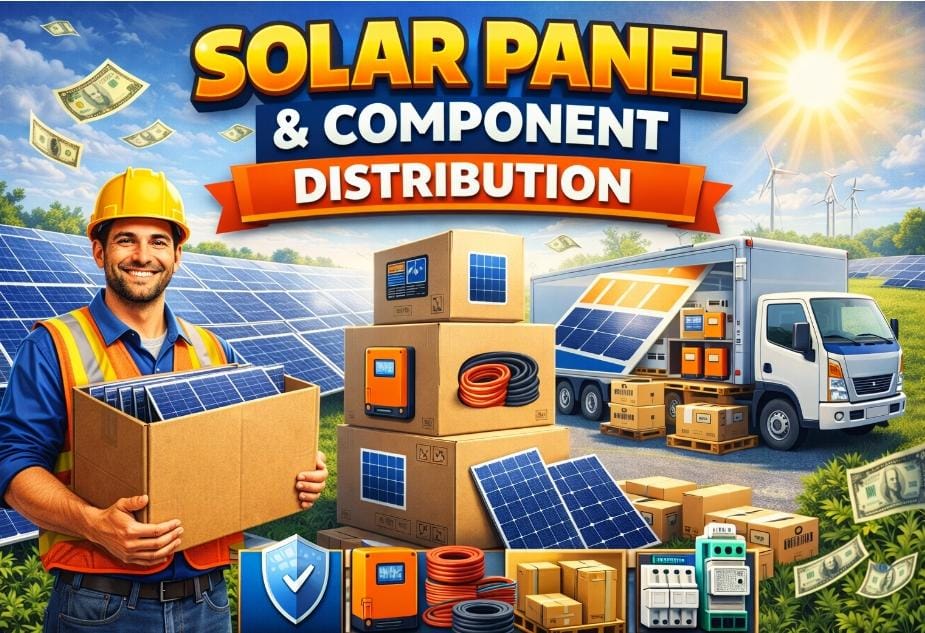
3. Solar Panel & Component Distribution:
Become the Supply Chain Backbone
Not everyone wants to install. You can become a crucial link by distributing panels, inverters, mounting structures, and cables to retailers, installers, and other businesses.
- Ideal For: Individuals with strong logistics, sales, and network-building skills.
- Investment Required: ₹10 Lakhs – ₹1 Crore, primarily tied up in inventory and warehouse space.
- Revenue Model: Margins on bulk sales.
- Profit Potential: Distributors typically earn a margin of 8-15%. High-volume turnover makes this a consistently profitable solar business.
- How to Start: Secure dealership or distributor agreements with 2-3 reputable manufacturers. Establish a well-located warehouse and a robust delivery system.
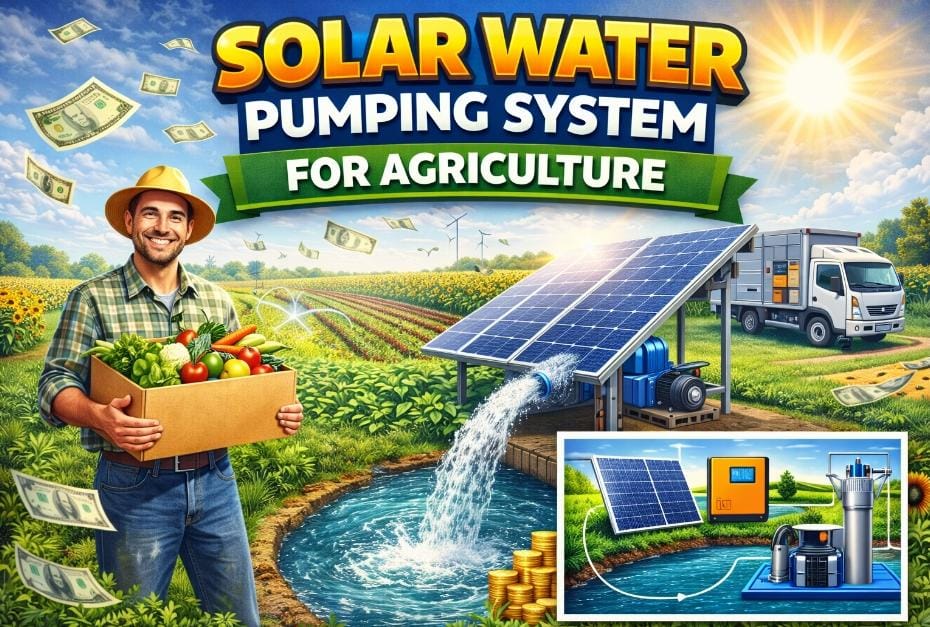
4. Solar Water Pumping Systems for Agriculture:
Tapping into the Rural Goldmine
The PM-KUSUM scheme is a game-changer, aiming to solarize agriculture. This business involves supplying and installing solar-powered irrigation pumps for farmers.
- Ideal For: Entrepreneurs with reach in rural or semi-urban areas and an understanding of agricultural needs.
- Investment Required: ₹10 Lakhs – ₹50 Lakhs for demo units, inventory, and installation kits.
- Revenue Model: Sale and installation of pumps, often facilitated by government subsidies.
- Profit Potential: Margins can range from 20-30% per pump. The scale is enormous, with millions of potential customers.
- How to Start: Get empaneled with state agriculture/energy departments. Collaborate with banks for farmer financing. Set up service centers in key districts.
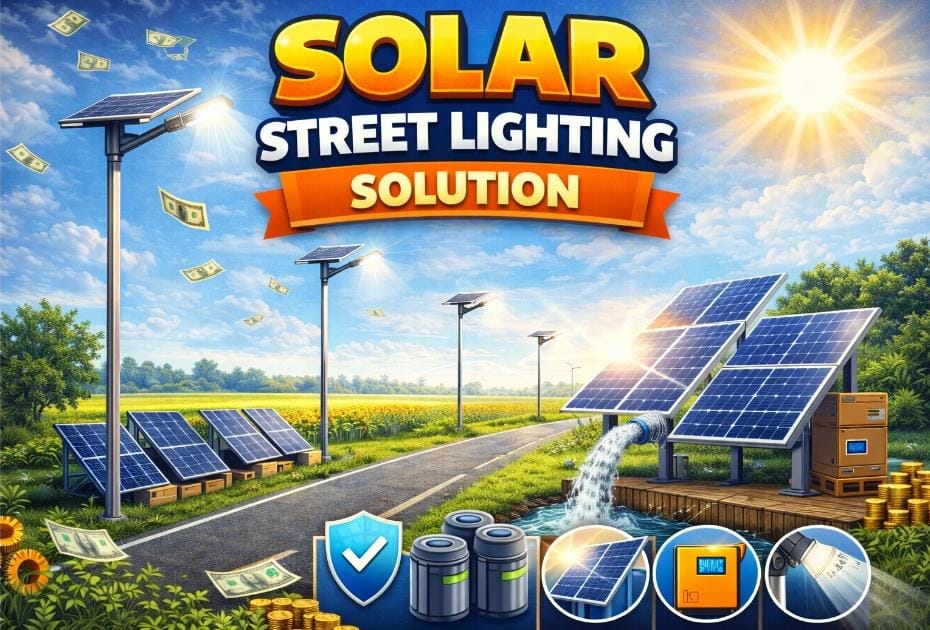
5. Solar Street Lighting Solutions:
Illuminating Profits with Government Contracts
Municipalities, panchayats, and highway authorities are rapidly replacing conventional street lights with solar alternatives. This B2G (Business-to-Government) model offers large-volume contracts.
- Ideal For: Businesses adept at handling government tenders and project execution.
- Investment Required: ₹20 Lakhs – ₹2 Crores, depending on the scale of tenders you target.
- Revenue Model: Winning government or municipal tenders for supply, installation, and maintenance.
- Profit Potential: Project-based profits can be substantial. A tender for 1,000 lights can have a total value of ₹2-5 Crores with healthy margins.
- How to Start: Register on government e-procurement portals. Ensure products are DLC/BIS certified. Build a track record with smaller municipal contracts first.
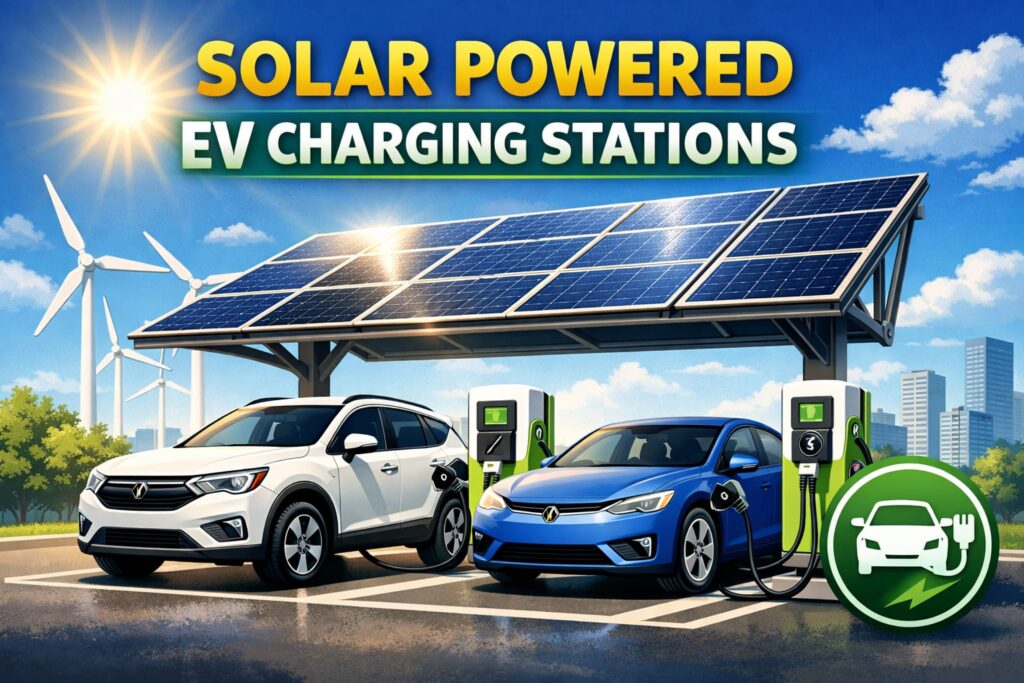
6. Solar-Powered EV Charging Stations:
The Synergy of Two Green Revolutions
As India’s EV fleet expands, solar-powered charging stations offer a unique value proposition: low-cost, green charging. This is a future-proof infrastructure play.
- Ideal For: Owners of land near highways, parking lots, or fleet operators.
- Investment Required: ₹5 Lakhs – ₹25 Lakhs per station for chargers, solar canopy, and battery storage.
- Revenue Model: Charging fees, partnership with EV fleets, or advertising revenue at the station.
- Profit Potential: ROI periods are longer (3-5 years), but it creates a long-term, passive income asset with high growth potential.
- How to Start: Secure strategic locations with necessary permissions. Explore partnerships with EV manufacturers or ride-hailing companies.
7. Solar Battery Storage & Hybrid Systems:
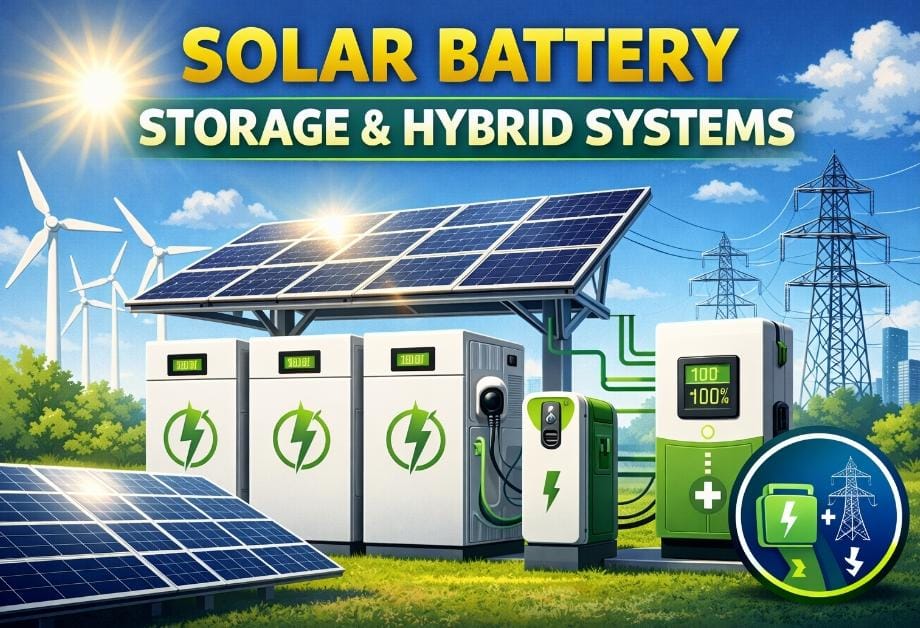
Solving the Intermittency Challenge
With increased renewable penetration, the need for storage is critical. This business focuses on selling and integrating lithium-ion/other batteries with solar systems for backup and off-grid solutions.
- Ideal For: Technically sound entrepreneurs who understand energy storage and power electronics.
- Investment Required: ₹15 Lakhs – ₹1 Crore for technical team and inventory of storage solutions.
- Revenue Model: Sale and integration of battery packs, specialized hybrid inverters, and system design services.
- Profit Potential: High-value niche with margins often exceeding 25%.
- How to Start: Partner with leading battery technology providers. Obtain certifications for installing grid-interactive hybrid systems.
8. Solar Product Retail & E-commerce:
Low-Ticket, High-Volume Entry Point
This involves retailing smaller solar products like lanterns, home lighting systems, solar cookers, fans, and mobile chargers, especially in semi-urban and rural markets.
- Ideal For: Anyone can start this from a small shop or even online.
- Investment Required: Low. ₹50,000 – ₹5 Lakhs for initial stock.
- Revenue Model: Direct sales margin.
- Profit Potential: Margins range from 20-40%. It’s a great way to build a brand before moving into larger systems.
- How to Start: Source quality products from manufacturers. Set up a retail outlet or an e-commerce website (on platforms like Amazon, Meesho).
9. Solar Consultancy & Auditing Services:
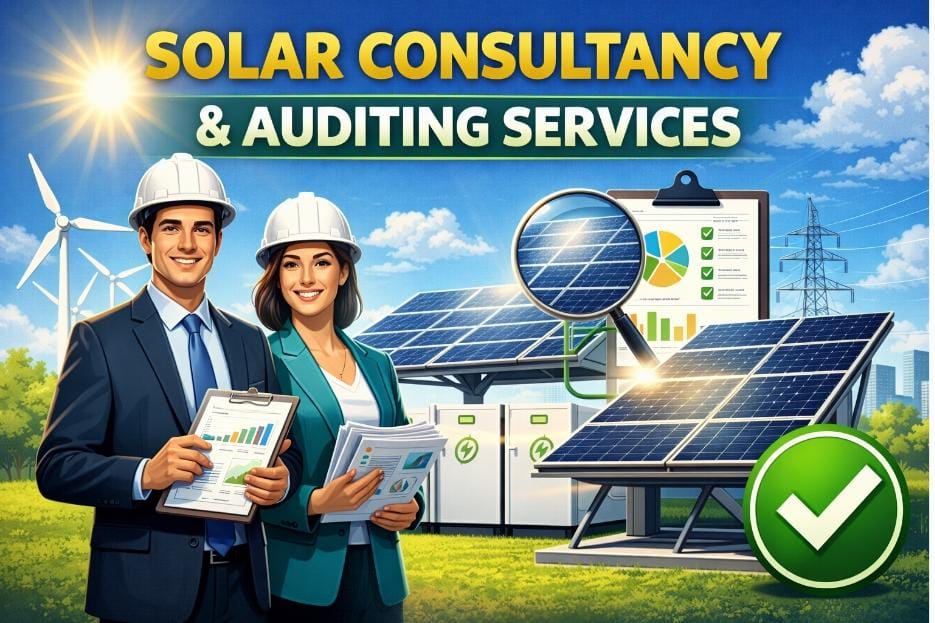
The Knowledge-Based, Low-Capital Model
Leverage expertise without heavy investment. Offer services like energy audits, feasibility studies, technical design, tender documentation, and project management consultancy.
- Ideal For: Engineers, MBAs, or professionals with solar industry experience.
- Investment Required: Very Low. ₹1-5 Lakhs for office setup and certifications.
- Revenue Model: Professional service fees (daily rates or project-based).
- Profit Potential: High hourly/daily rates. A single commercial audit and design project can fetch ₹50,000 – ₹2 Lakhs.
- How to Start: Get certified as an energy auditor. Build a portfolio by initially assisting friends or local businesses.
10. Solar Maintenance, Cleaning & AMC Services:
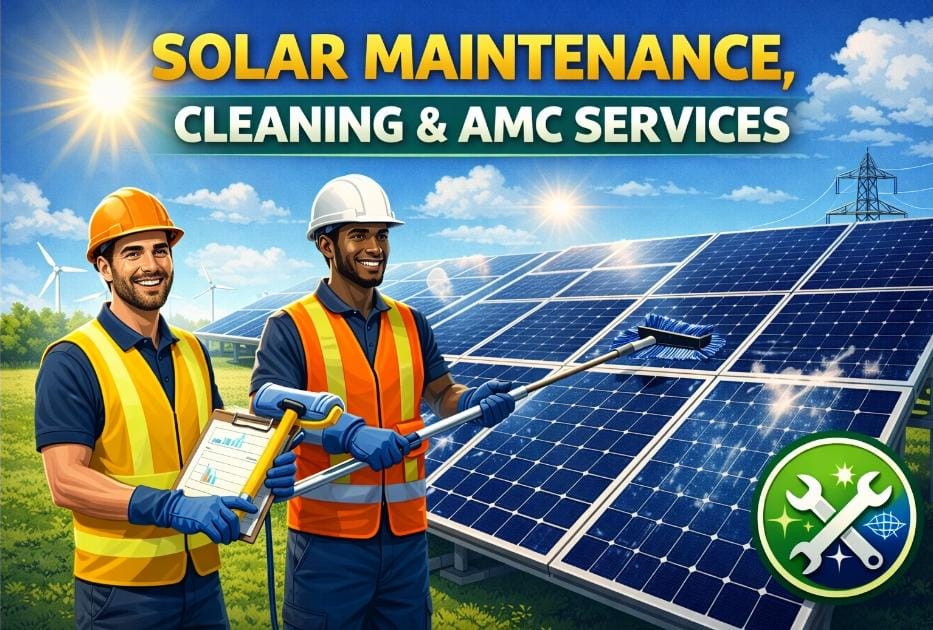
The Essential Recurring Revenue Stream
As millions of panels get installed, they will need upkeep. This business focuses exclusively on post-installation services: cleaning, health checks, performance monitoring, and repairs.
- Ideal For: Highly accessible, requiring minimal start-up capital.
- Investment Required: Low. ₹2-10 Lakhs for cleaning equipment, monitoring tools, and a service vehicle.
- Revenue Model: Annual Maintenance Contracts (AMC) or per-service charges.
- Profit Potential: Steady monthly income. An AMC for a 10kW commercial system can be ₹10,000 – ₹20,000/year. Scaling this across hundreds of clients is key.
- How to Start: Train staff on safe cleaning and basic diagnostics. Partner with installers to offer their clients AMC services.
Comparative Analysis of Profitable solar business idea:
| Business Idea | Investment Range | Skill Requirement | Scalability | Time to Breakeven | Best For |
|---|---|---|---|---|---|
| Rooftop Installation | ₹5L – ₹20L | Technical/Managerial | High | 6-12 Months | Hands-on entrepreneurs |
| Solar EPC Firm | ₹50L – ₹5Cr+ | High Technical | Very High | 18-36 Months | Experienced professionals |
| Distribution | ₹10L – ₹1Cr | Sales & Logistics | High | 12-18 Months | Network builders |
| Solar Pumps | ₹10L – ₹50L | Agri-sector understanding | High | 12-18 Months | Rural-focused entrepreneurs |
| Street Lights | ₹20L – ₹2Cr | Govt. Tender Expertise | Medium | Project-based | B2G specialists |
| EV Charging | ₹5L – ₹25L/station | Infrastructure management | High | 3-5 Years | Asset builders |
| Battery Storage | ₹15L – ₹1Cr | High Technical | High | 12-24 Months | Tech-focused innovators |
| Product Retail | ₹0.5L – ₹5L | Basic Sales | Medium | 3-6 Months | Beginners, side hustles |
| Consultancy | ₹1L – ₹5L | Expert Knowledge | Medium | Immediate | Industry experts |
| Maintenance Services | ₹2L – ₹10L | Operational | High | 3-6 Months | Service-oriented individuals |
FAQs: (profitable solar business idea)
Q1: What is the single most profitable solar business idea in India for a beginner?
A: For a beginner with moderate capital, profitable solar business idea is Residential Rooftop Solar Installation which offers the best balance of demand, margin, and scalability. The PM Surya Ghar Yojana subsidy acts as a powerful catalyst, driving customer acquisition.
Q2: How much government subsidy can I expect for starting a solar business?
A: While subsidies are primarily for end-consumers, your business can benefit indirectly through increased demand. However, as a business entity, you can avail benefits like:
- Priority Sector Lending from banks.
- Capital/Interest Subsidies under various state-level MSME and startup policies.
- Tax Benefits like accelerated depreciation for solar assets you own (e.g., in an EPC model).
Q3: Is technical certification mandatory to start?
A: While not always legally mandatory for all business types, certifications are highly recommended. For installation businesses, having MNRE-certified technicians on staff is crucial for credibility and to access government subsidy channels. For EPC, electrical contractor licenses are mandatory.
Q4: Can I start a solar business from home initially?
A: Absolutely! Several models are perfect for home-based starts:
- Solar Consultancy: Requires just a laptop and phone.
- Solar Product Retail/E-commerce: Can be run from a home office with online stores.
- Small-scale Installation: You can manage operations and marketing from home, deploying teams to sites.
Q5: Which solar business has the highest potential in rural India?
A: Solar Water Pumps and Decentralized Solar Product Retail (lanterns, home systems) have immense rural potential. They solve acute problems—irrigation and basic electricity—and are heavily promoted through central government schemes like PM-KUSUM.
Q6: How do I ensure the quality of solar panels I source?
A: Always partner with manufacturers whose panels are listed on the ALMM (Approved List of Models and Manufacturers) issued by MNRE. This is a non-negotiable for quality and eligibility for subsidies. Ask for BIS certification and product warranty documents.
Conclusion: Your Time is Now
The sun is not just rising; it’s shining brightly on India’s entrepreneurial landscape. The profitable solar business ideas in India outlined here are more than just concepts—they are viable pathways to building a sustainable enterprise that contributes to the nation’s energy security and environmental goals.
The key to success lies in meticulous planning: choose a model that aligns with your capital, skills, and passion. Start with deep market research, build a strong network of suppliers and partners, prioritize quality and after-sales service, and leverage government policies smartly.
From a modest home-based consultancy to a large-scale EPC venture, the solar sector offers a spectrum of opportunities. By taking the plunge in 2025, you position yourself at the forefront of India’s clean energy revolution, ensuring both planetary health and personal profitability. The future is solar. The business is here. The question is, are you ready to harness it?
- Tata Solar Panel vs Adani Solar Panel: Price, Efficiency, Warranty & Which Is Better?
- Tata Solar Panel 2026: Your Complete Guide to Prices, Savings, and Performance
- Adani Solar Panels 2026: Price, Power Generation, Savings, Subsidy and Complete Buyer Guide
About the Author






I want to gake dealership in kanpur Uttar Pradesh
I want to take solar dealership