Who Is Imaan Mazari? Pakistani lawyer Imaan Zainab Mazari Jailed Over ‘Anti-State’ Social Media Posts
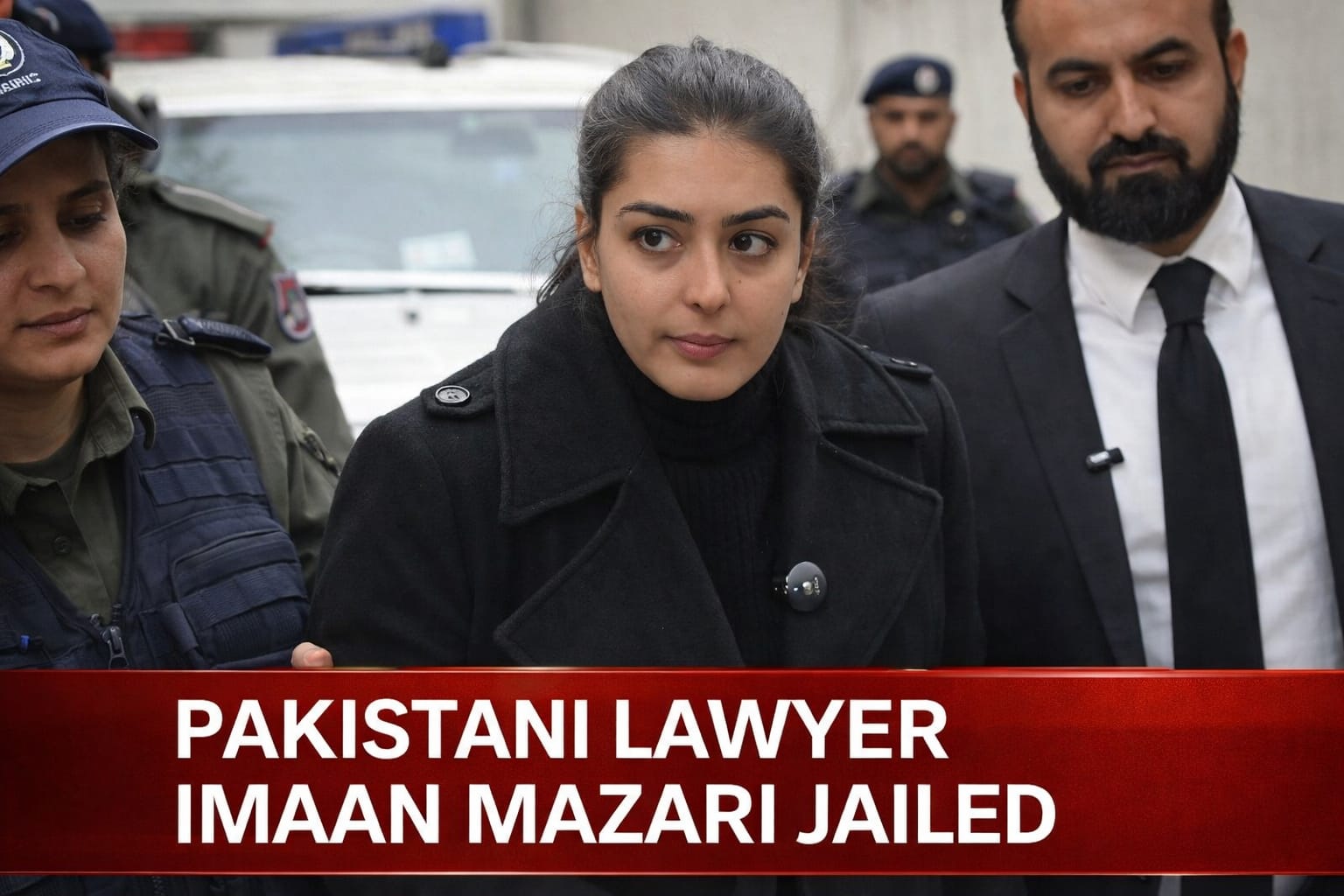
The question “Who Is Imaan Mazari?” has surged across global search trends after a Pakistani court sentenced the outspoken human rights lawyer and her husband to long prison terms for alleged “anti-state” social media posts. The case of Pakistani lawyer Imaan Zainab Mazari has become a flashpoint in Pakistan’s ongoing struggle between state authority and freedom of expression.
Her arrest and conviction are not just about one individual—they reflect a broader crackdown on dissent, digital speech, and human rights advocacy in Pakistan.
Table of Contents:
Who Is Imaan Mazari?
Who Is Imaan Mazari?
Imaan Zainab Mazari-Hazir is a 32-year-old Pakistani human rights lawyer known for defending journalists, ethnic minorities, political dissidents, and individuals accused under Pakistan’s controversial blasphemy laws.
She is widely regarded as one of the boldest legal voices challenging state institutions, particularly Pakistan’s powerful military establishment.
Early Life and Education:
Pakistani lawyer Imaan Zainab Mazari comes from a prominent family:
| Detail | Information |
|---|---|
| Mother | Shireen Mazari, former Federal Minister for Human Rights |
| Father | Late Prof. Mazhar Mahmood, renowned pediatrician |
| Education | University of Edinburgh |
| Profession | Human rights and constitutional lawyer |
Despite her elite background, Mazari chose a path of pro-bono activism rather than corporate law—a decision that would place her in direct conflict with state authorities.
Rise of Pakistani Lawyer Imaan Zainab Mazari
The rise of Pakistani lawyer Imaan Zainab Mazari coincided with an era of shrinking civic space in Pakistan. She gained national attention by taking up cases many lawyers avoided due to political risk.
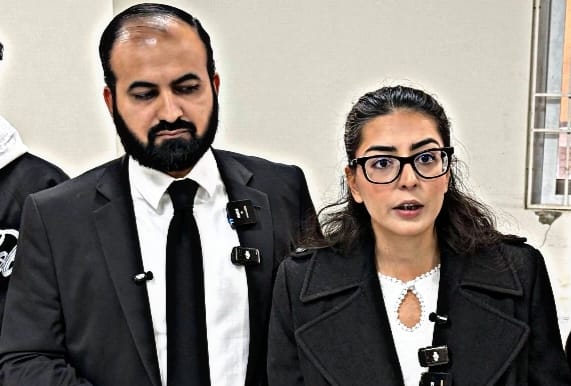
Her courtroom arguments and public statements often highlighted:
- Enforced disappearances
- Extrajudicial killings
- Media censorship
- Abuse of cybercrime laws
This visibility made her both influential and vulnerable.
Key Human Rights Cases She Fought
Imaan Mazari’s legal career includes some of Pakistan’s most sensitive cases:
Major Areas of Work –
- Balochistan enforced disappearances
- Defense of journalist Asad Ali Toor
- Representation of blasphemy-accused individuals
- Legal aid for Afghan refugees
- Advocacy against military overreach
Her defense of Baloch activist Mahrang Baloch placed her firmly on the radar of security agencies.
Pakistan Drones Spotted on India: Rising Security Concerns Along LoC and IB
Why Was Imaan Mazari Arrested?
The arrest of Imaan Mazari stemmed from social media posts critical of Pakistan’s military and state institutions.
Authorities accused her of:
- Cyberterrorism
- Glorification of terrorism
- Spreading “false information”
- Anti-state propaganda
According to court documents, her posts between 2021 and 2025 were deemed “highly offensive” and “damaging to public trust.”
Understanding Pakistan’s PECA Law:
The Prevention of Electronic Crimes Act (PECA) is central to the case of Pakistani lawyer Imaan Zainab Mazari.
Why PECA Is Controversial?
- Broad definitions of “terrorism”
- Criminalisation of criticism
- Heavy prison terms for online speech
- Limited judicial oversight
Human rights groups argue PECA has transformed from a cybercrime law into a political weapon.
Court Verdict and Jail Sentence Explained
| Charge | Law Section | Sentence |
|---|---|---|
| Cyberterrorism | PECA Section 10 | 10 years |
| Glorification of terrorism | PECA Section 9 | 5 years |
| Spreading false information | Section 26-A | 2 years |
| Total (Concurrent) | — | 10–17 years |
The court ruled that Mazari’s content aligned with narratives of banned militant groups—an accusation she strongly denies.
Comparison: Imaan Mazari vs Other Pakistani Dissidents
| Lawyer | Cause | Outcome |
|---|---|---|
| Asma Jahangir | Judicial independence | Global recognition |
| Jibran Nasir | Civil liberties | Harassment |
| Imaan Mazari | Digital free speech | Long jail term |
Many observers compare Mazari to the late Asma Jahangir, calling her part of a new generation of resistance.
Impact on Freedom of Speech in Pakistan
The conviction raises alarming questions:
- Can criticism be equated with terrorism?
- Is social media activism now a criminal offence?
- Are lawyers safe representing dissenting voices?
According to digital rights groups, Pakistan now ranks among the most restrictive environments for online expression in South Asia.
International Reaction and Human Rights Concerns
Global organisations responded sharply:
- Amnesty International: Called the trial retaliatory
- UN Special Rapporteur: Flagged misuse of legal system
- World Expression Forum: Previously honoured Mazari
In 2025, Mazari received the Young Inspiration Award for courage and integrity—highlighting the contrast between international praise and domestic punishment.
Timeline of Key Events:
| Date | Event |
|---|---|
| 2021–2025 | Social media posts published |
| Aug 2025 | Case filed by cybercrime agency |
| Jan 23, 2026 | Arrest outside courthouse |
| Jan 25, 2026 | Court verdict |
| Jan 26, 2026 | Global outrage |
Data Table: Charges, Laws, and Penalties
| Law | Maximum Penalty |
|---|---|
| PECA Section 10 | Life imprisonment |
| PECA Section 9 | 5 years + fine |
| Section 26-A | 3 years |
Experts say Mazari’s sentence sets a dangerous precedent for future cases.
Frequently Asked Questions (Q&A):
Who Is Imaan Mazari?
Imaan Mazari is a Pakistani human rights lawyer known for defending journalists, minorities, and political dissidents.
Why was Pakistani lawyer Imaan Zainab Mazari jailed?
She was convicted under cybercrime laws for social media posts critical of state institutions.
Is Imaan Mazari linked to militant groups?
No independent evidence supports this claim; rights groups dispute the allegation.
Can the verdict be overturned?
Legal experts believe higher courts may review procedural flaws.
What does this mean for Pakistan?
The case signals increased pressure on free speech and legal activism.
Conclusion:
The story of Who Is Imaan Mazari is no longer just a profile—it is a warning. The imprisonment of Pakistani lawyer Imaan Zainab Mazari highlights the growing risks faced by lawyers, journalists, and activists in Pakistan.
Her case underscores a defining question for the country’s future:
Can democracy survive when dissent is treated as a crime?
As global attention intensifies, the fate of Imaan Mazari may well shape Pakistan’s human rights narrative for years to come.
About the Author