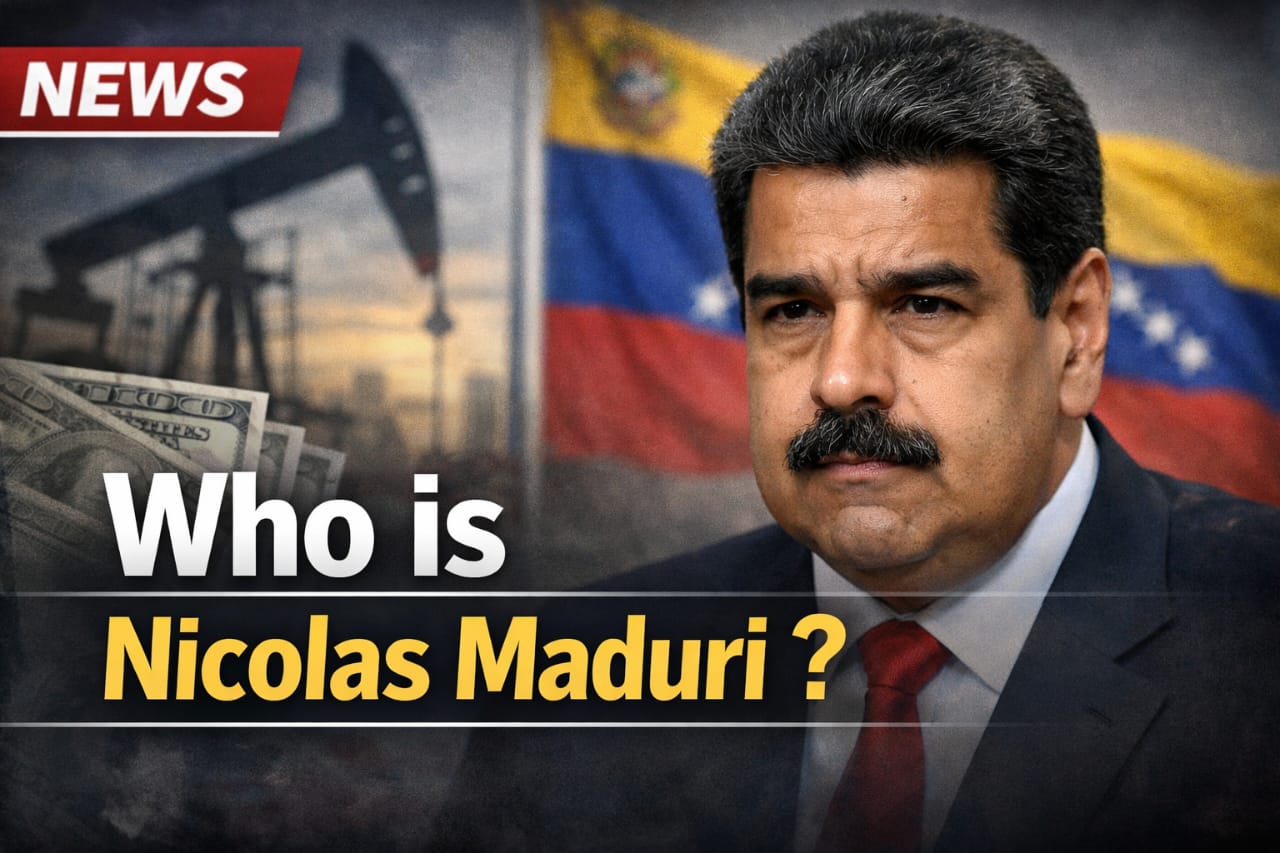
who is Nicolas Maduro?
Introduction: Why the World Is Asking “Who Is Nicolas Maduro?”
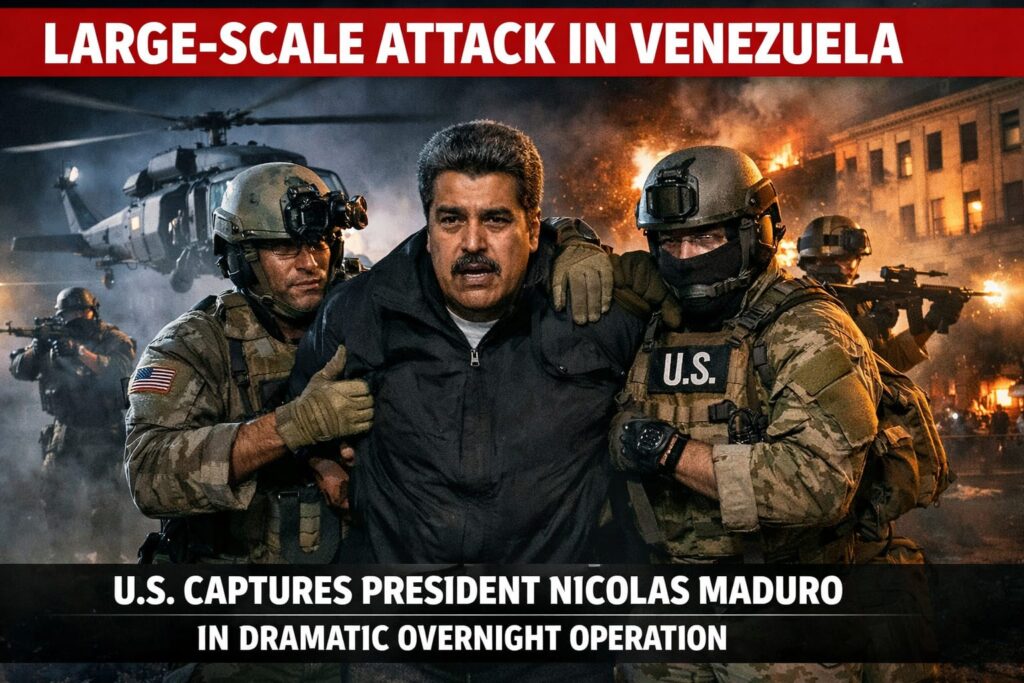
The question “Who is Nicolas Maduro?” has resurfaced at the top of global search trends after dramatic claims by former U.S. President Donald Trump that U.S. forces had captured the Venezuelan leader. Whether viewed as a symbol of resistance to U.S. influence or as an authoritarian ruler accused of economic mismanagement and repression, Nicolas Maduro remains one of the most controversial political figures of the 21st century.
From humble beginnings as a bus driver to becoming the handpicked successor of Hugo Chávez, Maduro’s rise reflects the transformation—and turmoil—of modern Venezuela. His presidency has coincided with economic collapse, international sanctions, mass migration, and persistent accusations of human rights abuses.
This in-depth explainer answers one central question in full detail: Who is Nicolas Maduro?
Quick Profile: Nicolas Maduro at a Glance
| Attribute | Details |
|---|---|
| Full Name | Nicolás Maduro Moros |
| Date of Birth | November 23, 1962 |
| Birthplace | Caracas, Venezuela |
| Political Party | United Socialist Party of Venezuela (PSUV) |
| Ideology | Socialist, Bolivarianism |
| Occupation | Politician, Former Trade Unionist |
| President Since | 2013 |
| Predecessor | Hugo Chávez |
| Global Status | Sanctioned by U.S., EU, others |
Early Life: Working-Class Roots That Shaped a Political Identity
To understand who Nicolas Maduro is, one must begin with his origins.
Maduro was born into a working-class family in Caracas. His father was a trade union leader, and his mother worked in local community services. Unlike many Latin American political elites, Maduro did not attend prestigious universities abroad. Instead, his political worldview was shaped on the streets, in unions, and on public transport.
From School to the Steering Wheel –
- Maduro left formal education relatively early
- Worked as a bus driver in the Caracas Metro system
- Became active in transport workers’ unions
This background allowed him to cultivate an image of a leader who “came from the people”, a narrative later reinforced by Hugo Chávez.
The Chávez Connection: How Maduro Entered Power Politics ?
The 1992 Coup Attempt That Changed Everything –
In 1992, army officer Hugo Chávez led a failed coup against Venezuela’s government. While Chávez was imprisoned, Maduro became one of his most vocal civilian supporters, campaigning for his release.
This moment marked the beginning of Maduro’s lifelong political loyalty.
Rise Within the Bolivarian Movement –
After Chávez won the presidency in 1998:
- Maduro joined the National Assembly
- Became President of the National Assembly (2005–2006)
- Appointed Foreign Minister (2006–2013)
As foreign minister, Maduro:
- Built alliances with Cuba, Russia, Iran, China
- Promoted anti-U.S. rhetoric internationally
- Positioned himself as Chávez’s most trusted civilian ally
Chávez Names His Successor –
Before his death in 2013, Hugo Chávez publicly declared:
“If something happens to me… choose Nicolas Maduro.”
This endorsement paved the way for Maduro’s ascent.
Becoming President: A Narrow and Contested Victory
After Chávez’s death in March 2013, Maduro ran for president.
2013 Election Snapshot –
| Candidate | Vote Share |
|---|---|
| Nicolas Maduro | ~50.6% |
| Henrique Capriles | ~49.1% |
Maduro won by a razor-thin margin, immediately facing allegations of electoral irregularities. The legitimacy of his presidency would remain under scrutiny from that moment onward.
Economic Collapse Under Maduro: What Went Wrong?
One of the most searched follow-ups to “Who is Nicolas Maduro?” is:
“Why did Venezuela’s economy collapse?”
Key Economic Indicators (Simplified) –
| Indicator | 2012 | 2018 | 2024 |
|---|---|---|---|
| Inflation | ~20% | 130,000%+ | Triple-digit |
| Oil Production (bpd) | 2.5M | <1M | ~800k |
| Poverty Rate | 30% | 90% | ~85% |
Causes of the Crisis –
- Heavy dependence on oil exports
- Price controls and currency restrictions
- Decline in global oil prices
- Corruption within state oil company PDVSA
- U.S. and international sanctions
Visual: Venezuela’s Economic Decline (Index Representation) –
GDP Index
100 |█████████████████
 80 |███████████
 60 |███████
 40 |████
 20 |██
   0|_
     2012   2015   2018   2021   2024
Human Rights Record: Accusations and Global Condemnation
Another crucial part of understanding who Nicolas Maduro is involves his human rights record.
Protest Crackdowns –
- 2014 protests: dozens killed
- 2017 protests: hundreds detained
- 2024 protests: thousands jailed after disputed elections
UN Findings –
A UN fact-finding mission accused Venezuelan security forces of:
- Arbitrary detentions
- Torture
- Extrajudicial killings
The Venezuelan government has rejected all accusations, calling them politically motivated.
Elections, Sanctions, and International Isolation:
U.S. Indictment and Sanctions –
In 2020, the U.S. indicted Maduro on charges including:
- Drug trafficking
- Corruption
- “Narco-terrorism”
Washington offered a reward for information leading to his arrest. Maduro dismissed the charges as “imperialist fiction.”
2024 Election Controversy –
Maduro was sworn in for a third term in January 2025 after a 2024 election widely criticized by:
- Opposition parties
- International observers
Thousands of protesters were arrested in the aftermath.
Comparison: Nicolas Maduro vs Hugo Chávez
| Aspect | Hugo Chávez | Nicolas Maduro |
|---|---|---|
| Charisma | High | Moderate |
| Military Background | Yes | No |
| Economic Context | Oil boom | Oil collapse |
| Global Image | Polarizing | Largely isolated |
| Support Base | Broad | Narrower |
Media Narrative: Supporters vs Critics
Supporters Say:
- He defends Venezuela’s sovereignty
- Resists U.S. intervention
- Continues Chávez’s social programs
Critics Say:
- He dismantled democratic institutions
- Mismanaged the economy
- Suppressed dissent
Frequently Asked Questions (Q&A):
Q1: Who is Nicolas Maduro?
Nicolas Maduro is the President of Venezuela, a former bus driver and trade unionist who rose to power as the successor of Hugo Chávez and has ruled since 2013.
Q2: Why is Nicolas Maduro controversial?
He is controversial due to economic collapse, disputed elections, sanctions, and human rights allegations.
Q3: Is Nicolas Maduro a dictator?
Supporters deny this, but critics and international organizations often describe his rule as authoritarian.
Q4: Why does the U.S. oppose Nicolas Maduro?
The U.S. accuses him of corruption, drug trafficking, election fraud, and repression.
Q5: How long has Nicolas Maduro been president?
He has been in power since 2013, serving multiple contested terms.
Why “Who Is Nicolas Maduro” Continues to Trend on Google Discover
- Ongoing geopolitical tension
- U.S.–Latin America relations
- Migration crisis
- Sanctions and global energy politics
- Dramatic claims of detention or capture
These factors keep Who is Nicolas Maduro among the most searched political queries worldwide.
Conclusion: A Leader Who Defines an Era of Crisis
So, who is Nicolas Maduro?
He is a leader shaped by working-class roots, elevated by loyalty to Hugo Chávez, and defined by one of the deepest economic and political crises in modern Latin American history. To supporters, he is a defender of sovereignty. To critics, he is the architect of Venezuela’s decline.
Regardless of perspective, Nicolas Maduro remains a central figure in global geopolitics—one whose actions continue to influence millions of lives inside and outside Venezuela.
Who Is Jyothi Yarraji – 100m Hurdles Champion Who Redefined Indian Hurdling
Who Is Neerja Birla? Meet Kumar Mangalam Birla’s Wife Who Built a Quiet Legacy of Impact
About the Author