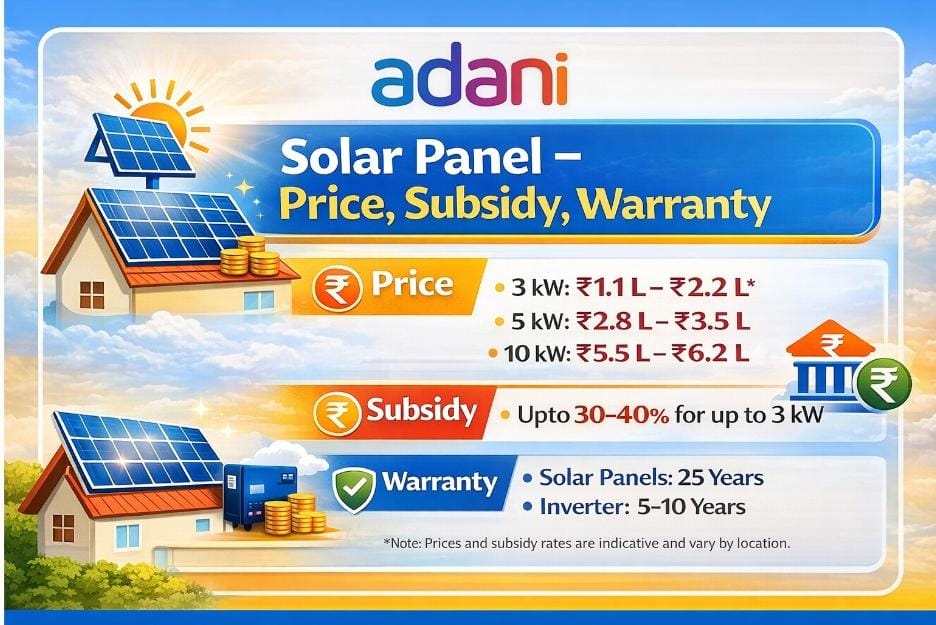
Adani Solar Panels 2026 | Price List, Subsidy, 25-Year Warranty & Savings Guide
With electricity tariffs rising across India and sustainability becoming a priority, solar energy is no longer a luxury—it is a necessity. Among the brands driving this transition, Adani Solar Panels has emerged as a major choice for Indian households and businesses. In 2026, the company’s solar panel systems are gaining massive attention due to competitive pricing, strong output, and long-term reliability.
This detailed guide explains everything you need to know about Adani Solar Panels 2026, including pricing, daily power generation, installation cost, government subsidy, savings, system sizes, and whether it is worth buying in 2026.
Table of Contents:
What Is Adani Solar Panel?
Adani Solar Panels are manufactured by Adani Solar, a part of the Adani Group’s renewable energy division. These panels convert sunlight into electricity using high-efficiency solar cells and are designed for residential, commercial, and industrial use.
Known for their strong build quality, Indian manufacturing base, and long lifespan, Adani panels are widely used in rooftop installations as well as large solar power plants.
Why Adani Solar Panels Are Demanded?
The Adani brand brings immense scale, integrated manufacturing, and a nationwide service network to the solar market. Their vertical integration—from producing solar cells to executing large-scale projects—ensures quality control and cost efficiency. In 2026, this translates to reliable, high-performance panels accessible to a broad consumer base, fueling their high demand.
Profitable Solar Business Ideas in India: Best Opportunities to Make Money in 2026
How Many Units Are Generated Per Day?
Daily power generation depends on system size, sunlight availability, and installation angle.
Average Daily Power Generation –
| System Size | Units Generated Per Day |
|---|---|
| 1 kW | 4–5 units |
| 3 kW | 12–15 units |
| 5 kW | 20–25 units |
| 7 kW | 25–28 units |
| 10 kW | Up to 30 units |
In optimal sunlight conditions, higher-capacity systems can easily reach up to 30 units per day, making them suitable for large homes and businesses.
Monthly Savings With Adani Solar Panels 2026:
Monthly savings depend on electricity tariff rates, which usually range between ₹7 and ₹9 per unit in most Indian states.
Estimated Monthly Savings –
| System Size | Monthly Units | Estimated Savings |
|---|---|---|
| 1 kW | 120–150 | ₹900–₹1,200 |
| 3 kW | 360–450 | ₹2,500–₹3,500 |
| 5 kW | 600–750 | ₹4,500–₹6,000 |
| 10 kW | 900+ | ₹7,000–₹8,500 |
This makes Adani Solar systems an excellent long-term investment for reducing electricity bills.
Adani Solar Panel Installation Cost:
Installation cost varies based on rooftop size, structure, inverter type, and location.
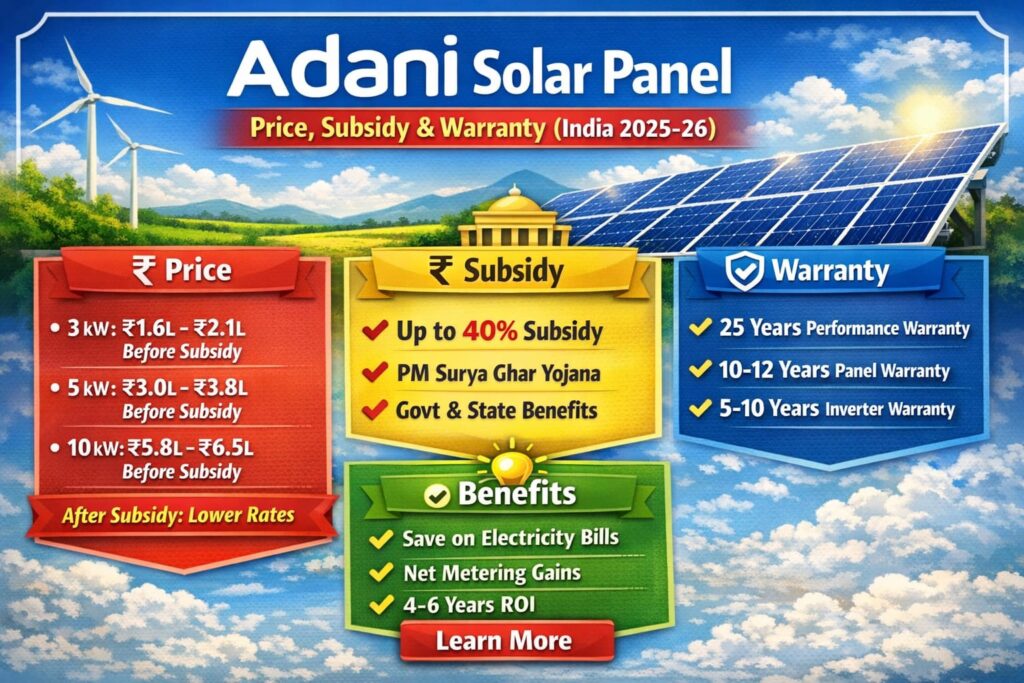
Average Installation Cost (Before Subsidy) –
| System Size | Cost Range |
|---|---|
| 1 kW | ₹60,000 – ₹75,000 |
| 3 kW | ₹1.8 – ₹2.2 lakh |
| 5 kW | ₹3 – ₹3.5 lakh |
| 10 kW | ₹6 – ₹7 lakh |
These prices include panels, inverter, mounting structure, wiring, and basic installation.
Government Subsidy On Adani Solar Panel 2026:
The Indian government offers subsidies under MNRE guidelines for residential rooftop solar installations.
Subsidy Structure (Residential) –
- Up to 3 kW: 30–40% subsidy
- Above 3 kW: Subsidy applicable on first 3 kW only
- Commercial systems: No direct subsidy
Subsidies significantly reduce upfront costs and shorten the payback period.
Lifespan And Maintenance Of Adani Solar Panel
Adani Solar Panels are built for durability and long-term use.
- Lifespan: 25–30 years
- Performance Warranty: 25 years
- Product Warranty: 10–12 years
Maintenance is minimal and mainly involves cleaning panels every few weeks and periodic system checks.
Who Should Install Adani Solar Panel?
Adani Solar Panels are ideal for:
- Homeowners with high electricity bills
- Small businesses and shops
- Offices and warehouses
- Educational institutions
- Factories and industrial units
Any property with adequate rooftop space and good sunlight exposure can benefit.
Benefits Of Installing Adani Solar Panel 2026
- Major reduction in electricity bills
- Protection against rising power tariffs
- Clean and renewable energy
- Low maintenance costs
- Increased property value
- Long-term financial savings
Reasons of Adani Solar Panels High Demand:
Several factors are driving demand in 2026:
- Trusted Indian brand
- Government-backed renewable push
- Competitive pricing
- Improved panel efficiency
- Strong service and warranty support
Consumers also prefer domestically manufactured panels due to reliability and easier service access.
Overview of Adani Solar Panel System Sizes (3kW–10kW)
| System Size | Ideal For | Monthly Units |
|---|---|---|
| 3 kW | Small homes | 360–450 |
| 5 kW | Medium homes | 600–750 |
| 7 kW | Large homes | 800+ |
| 10 kW | Commercial use | 900–1,000 |
Adani Solar Panel Price in 2026 (Estimated):
Panel Price Per Watt –
| Panel Type | Price per Watt |
|---|---|
| Polycrystalline | ₹25–₹30 |
| Monocrystalline (Mono PERC) | ₹30–₹35 |
| Bifacial Panels | ₹35–₹40 |
The Adani Solar Panel Price in 2026 remains competitive compared to other premium brands.
Power Generation: Up to 30 Units Per Day
A mid-capacity system, such as a 6-7kW Adani Solar Panel 2026 installation in a region with good irradiance, can effortlessly generate up to 30 units of electricity per day. This can cover the entire daily consumption of an average Indian household, leading to drastic reductions in grid dependency.
Warranty and Long-Term Reliability
Adani offers:
- 25-year performance warranty
- Strong degradation control
- Nationwide service support
- Proven track record in large solar projects
This makes it a reliable long-term investment.
Types of Adani Solar Systems Available:
- On-Grid Systems: Connect to the public grid, allowing net metering to earn credits for excess power fed back.
- Off-Grid Systems: Completely independent with battery storage, ideal for areas with unreliable grid supply.
- Hybrid Systems: Combine grid-connection with battery backup, offering the best of both worlds—energy savings and power security.
Installation Space and Roof Requirements
| System Size | Roof Area Needed |
|---|---|
| 1 kW | 100 sq ft |
| 3 kW | 300 sq ft |
| 5 kW | 500 sq ft |
| 10 kW | 1,000 sq ft |
A shadow-free roof is essential for optimal performance.
Savings and Return on Investment –
Most users recover their investment within 4–6 years, after which electricity is virtually free for the remaining lifespan of the system.
Environmental Benefits –
- Reduces carbon footprint
- Cuts fossil fuel dependence
- Supports India’s renewable goals
- Promotes sustainable living
A 5 kW system can reduce nearly 6–7 tons of CO₂ emissions annually.
Is Adani Solar Panel Worth Buying in 2026?
Yes. Considering rising electricity costs, government subsidies, and long-term savings, Adani Solar Panel 2026 is a smart and future-ready investment. With strong warranties, reliable performance, and scalable system sizes, it suits both households and businesses.
Frequently Asked Questions (FAQs)
Q1. What is the starting price of Adani Solar Panel in 2026?
Prices start around ₹60,000 for a 1 kW system before subsidy.
Q2. How much can I save monthly with a 5 kW system?
Savings can reach ₹4,500–₹6,000 per month.
Q3. Does Adani Solar qualify for government subsidy?
Yes, residential systems are eligible under MNRE guidelines.
Q4. How long do Adani Solar Panels last?
They last 25 years or more with minimal maintenance.
Conclusion:
In 2026, an Adani Solar Panel 2026 system is a strategically sound investment. With transparent Adani Solar Panel prices in 2026, substantial government subsidies, and the promise of decades of free electricity, it offers compelling financial returns and contributes meaningfully to a sustainable future. For those evaluating solar options, Adani stands as a powerful, reliable, and future-ready choice.
Tata Solar Panel 2026 Full Guide
About the Author