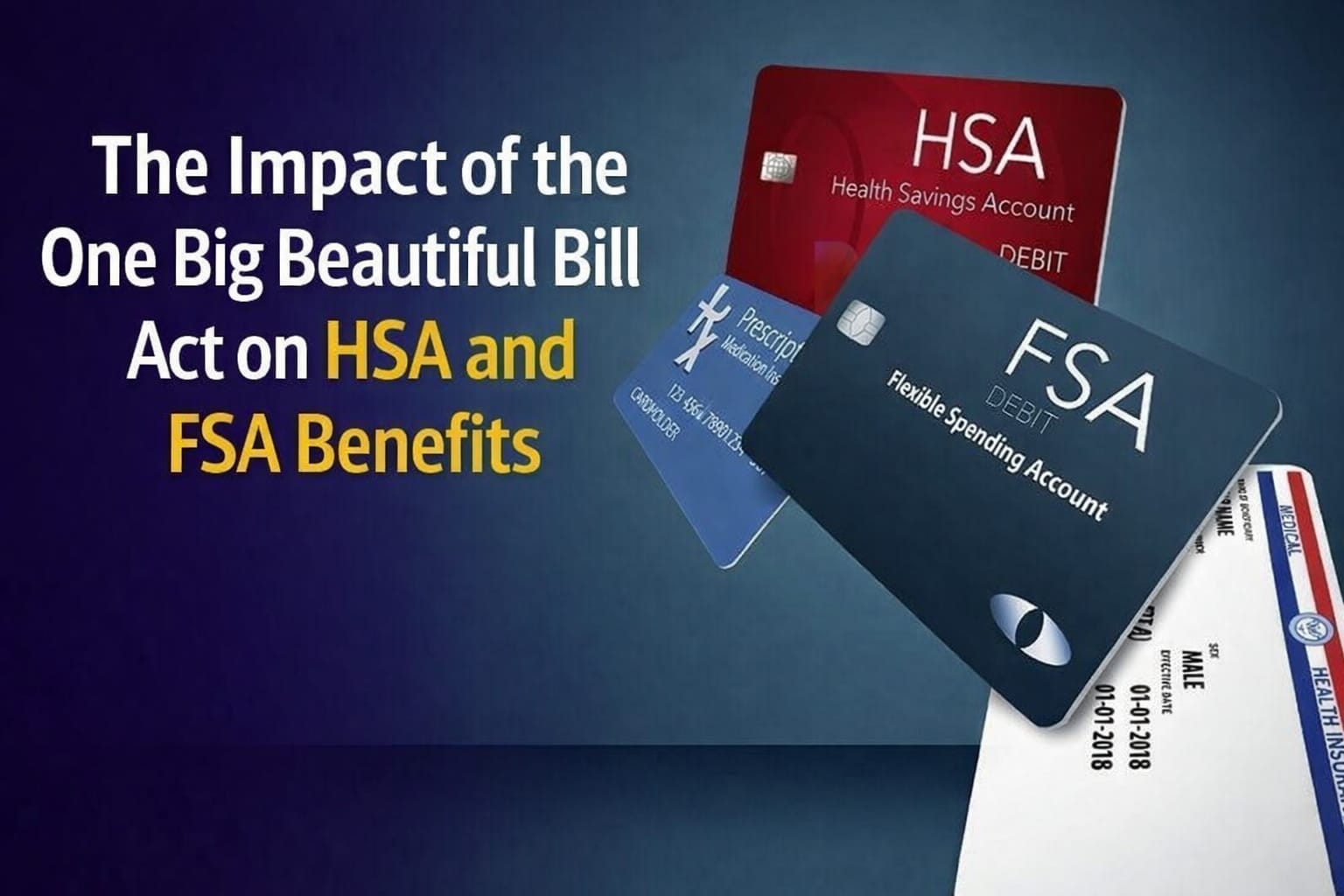
Impact of the One Big Beautiful Bill Act on HSA and FSA Benefits in 2026 | Idaho Tax Cuts Explained
The One Big Beautiful Bill Act is quickly becoming one of the most consequential pieces of U.S. economic legislation of the decade. Signed into law in late 2025, the act reshapes how Americans save for healthcare, how families manage childcare costs, and how states structure their tax codes.
At the heart of the debate lies the impact of the One Big Beautiful Bill Act on HSA and FSA benefits, alongside growing political tension as states decide whether to conform to the law’s sweeping tax cuts. Idaho’s recent vote to adopt nearly all of the federal provisions has turned the national spotlight on how federal policy collides with state budgets in real time.
This deep dive explains what changed, who benefits most, what employers and families must do in 2026, and why Idaho’s decision could set a precedent for other states.
Table of Contents:
Understanding the One Big Beautiful Bill Act
The One Big Beautiful Bill Act (OBBBA) is a comprehensive federal law aimed at two interconnected goals:
- Modernizing healthcare savings accounts to reflect how Americans actually access care today.
- Delivering individual and business tax relief, while encouraging economic activity.
Unlike smaller tax adjustments in the past, the One Big Beautiful Bill Act rewrites long-standing rules governing Health Savings Accounts (HSAs) and Flexible Spending Accounts (FSAs)—especially dependent care FSAs.
Why the Impact of the One Big Beautiful Bill Act on HSA and FSA Benefits Is So Significant?
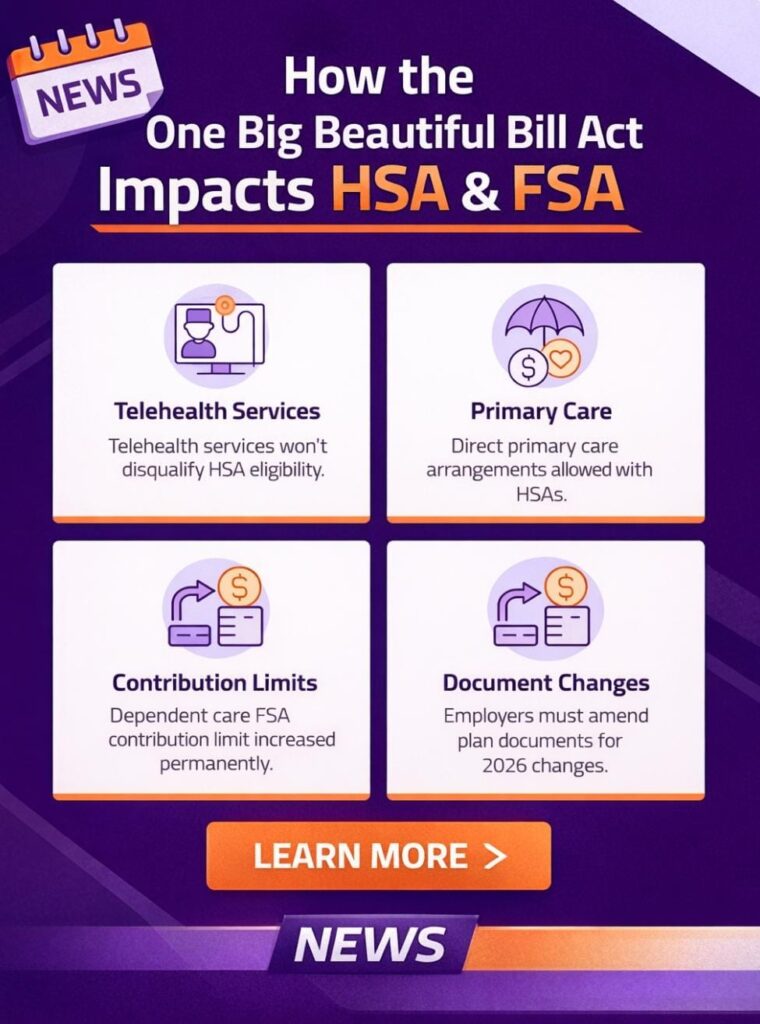
For more than a decade, HSA and FSA rules struggled to keep up with rising healthcare costs, telehealth expansion, and alternative care models like direct primary care. The impact of the One Big Beautiful Bill Act on HSA and FSA benefits lies in its structural overhaul rather than marginal tweaks.
Guidance from IRS Notice 2026-5 clarifies how these changes work in practice, making 2026 a turning point for employers, administrators, and employees alike.
Key Changes to Health Savings Accounts (HSAs)
Expanded HSA Eligibility: A Major Shift
Historically, HSA eligibility depended on rigid plan design rules. The One Big Beautiful Bill Act introduces flexibility without eliminating the high-deductible framework.
HSA Rule Changes at a Glance
| Feature | Before OBBBA | After One Big Beautiful Bill Act | Why It Matters |
|---|---|---|---|
| Telehealth | Often disqualified eligibility | Permanently allowed pre-deductible | Encourages early care |
| Direct Primary Care | Frequently disqualifying | Allowed with capped fees | Supports modern care models |
| Eligible Plans | Limited HDHPs only | Certain Bronze & Catastrophic plans | Expands access |
| Administrative Certainty | Temporary relief | Permanent rules | Easier plan design |
Telehealth Safe Harbor Becomes Permanent
One of the most praised provisions in the impact of the One Big Beautiful Bill Act on HSA and FSA benefits is the permanent telehealth safe harbor.
What changed?
Pre-deductible telehealth coverage—once a risk to HSA eligibility—is now permanently allowed.
Why it matters:
Employees can access:
- Mental health services
- Chronic care check-ins
- Virtual urgent care
…without losing the ability to contribute to an HSA.
Direct Primary Care (DPC) Integration
The One Big Beautiful Bill Act acknowledges the rise of subscription-based primary care.
Under IRS Notice 2026-5:
- Monthly DPC fees are allowed if capped
- Services must remain limited to primary care
- Hospitalization and specialty care still fall under the deductible
This carefully balanced approach preserves HSA integrity while expanding access.
Bronze and Catastrophic Plans Become HSA-Compatible
A major eligibility expansion allows certain Bronze-level and catastrophic ACA plans to qualify as HSA-compatible.
Result:
Younger workers and cost-conscious families can now pair lower premiums with long-term, tax-advantaged savings.
The Dependent Care FSA Transformation
While HSAs draw attention, the largest immediate family benefit from the One Big Beautiful Bill Act is the Dependent Care FSA increase.
What Changed?
- New permanent limit: $7,500 per household
- Replaces outdated caps that failed to match real childcare costs
Why the Impact of the One Big Beautiful Bill Act on HSA and FSA Benefits Hits Families Hardest Here?
Childcare, eldercare, and after-school programs now consume a growing share of household income. The higher limit allows families to shelter more income from taxes during peak caregiving years.
Dependent Care FSA vs Tax Credit: A Quick Comparison
| Feature | Dependent Care FSA | Dependent Care Tax Credit |
|---|---|---|
| Tax benefit | Pre-tax income | Credit at filing |
| Best for | Middle-to-higher earners | Lower-income households |
| Annual limit | $7,500 (permanent) | Expense-based |
| Timing | Immediate paycheck savings | Refund later |
Employees must still choose carefully—expenses cannot be double-counted.
Employer and Administrator Implications
The impact of the One Big Beautiful Bill Act on HSA and FSA benefits extends beyond employees. Employers must now treat benefits administration as a governance function.
Key Employer Responsibilities in 2026:
- Amend plan documents
- Update payroll systems
- Verify vendor compliance
- Monitor nondiscrimination testing
- Educate employees clearly
Failure to adapt could result in:
- Excess contributions
- Tax reporting errors
- Employee dissatisfaction
Idaho House Approves Bill to Conform to Nearly All ‘Big Beautiful’ Tax Cuts
The healthcare savings changes are only half the story.
On February 3, 2026, the Idaho House approved House Bill 559, aligning the state tax code with most provisions of the One Big Beautiful Bill Act.
Vote Breakdown –
- Passed: 59–9
- Party-line vote
- Now moves to the Idaho Senate
What Idaho’s HB 559 Would Do?
If enacted, the bill would adopt federal tax cuts for state income taxes, including:
Individual Provisions –
- No state tax on tips
- Overtime pay exclusions
- Higher standard deduction for seniors
(Most individual provisions expire federally in 2028.)
Business Provisions –
- Permanent deductions for research and experimentation
- Pro-growth incentives aimed at long-term investment
The Budget Debate: Relief vs Reality
The Idaho case highlights how the One Big Beautiful Bill Act plays out differently at the state level.
Estimated Fiscal Impact –
| Fiscal Year | Revenue Loss |
|---|---|
| 2025 | $155 million |
| 2026 | $175 million |
Supporters’ Argument –
Republican leaders argue:
- Workers keep more of what they earn
- Increased spending boosts sales tax revenue
- Long-term economic growth offsets losses
Opponents’ Warning –
Democrats counter that:
- Idaho already faces budget strain
- Agencies risk furloughs and service cuts
- Medicaid, corrections, and public safety could suffer
House Minority Leader Ilana Rubel warned that tax cuts and budgets are “inextricably intertwined.”
Federal Intent vs State Consequences:
| Dimension | Federal OBBBA | Idaho Response |
|---|---|---|
| Goal | National stimulus | Local tax relief |
| Risk | Federal deficit | State service cuts |
| Control | Congress | State legislature |
| Flexibility | Uniform | Optional conformity |
Why Idaho’s Decision Matters Nationally?
Idaho may serve as a bellwether for other states weighing whether to conform to the One Big Beautiful Bill Act.
States must now decide:
- Do tax cuts stimulate enough growth?
- Can budgets absorb short-term losses?
- Should conformity be delayed?
FAQs: One Big Beautiful Bill Act Explained
Q1: When do HSA and FSA changes take effect?
A: Plan years beginning January 1, 2026.
Q2: Does telehealth still affect HSA eligibility?
A: No. The One Big Beautiful Bill Act makes telehealth permanently safe.
Q3: Is the $7,500 dependent care FSA limit permanent?
A: Yes. Unlike past temporary increases, it does not sunset.
Q4: Will all states follow Idaho?
A: No. Each state must independently decide whether to conform.
The Bigger Picture:
The impact of the One Big Beautiful Bill Act on HSA and FSA benefits represents a philosophical shift. Benefits are no longer treated as static perks but as dynamic tools aligned with modern life.
At the same time, Idaho’s tax conformity debate shows that federal generosity can create local tension, forcing states to balance tax relief with service delivery.
Final Thoughts: Opportunity With Accountability
The One Big Beautiful Bill Act delivers meaningful flexibility, higher savings potential, and long-overdue updates to healthcare accounts. For families, it offers relief. For employers, opportunity. For states, a difficult choice.
Its success will depend not only on how much money Americans save, but on how responsibly governments and employers implement it.
As 2026 unfolds, the act’s legacy will be measured in both balance sheets and lived experience—making it one of the most closely watched policy experiments in modern U.S. fiscal history.
About the Author