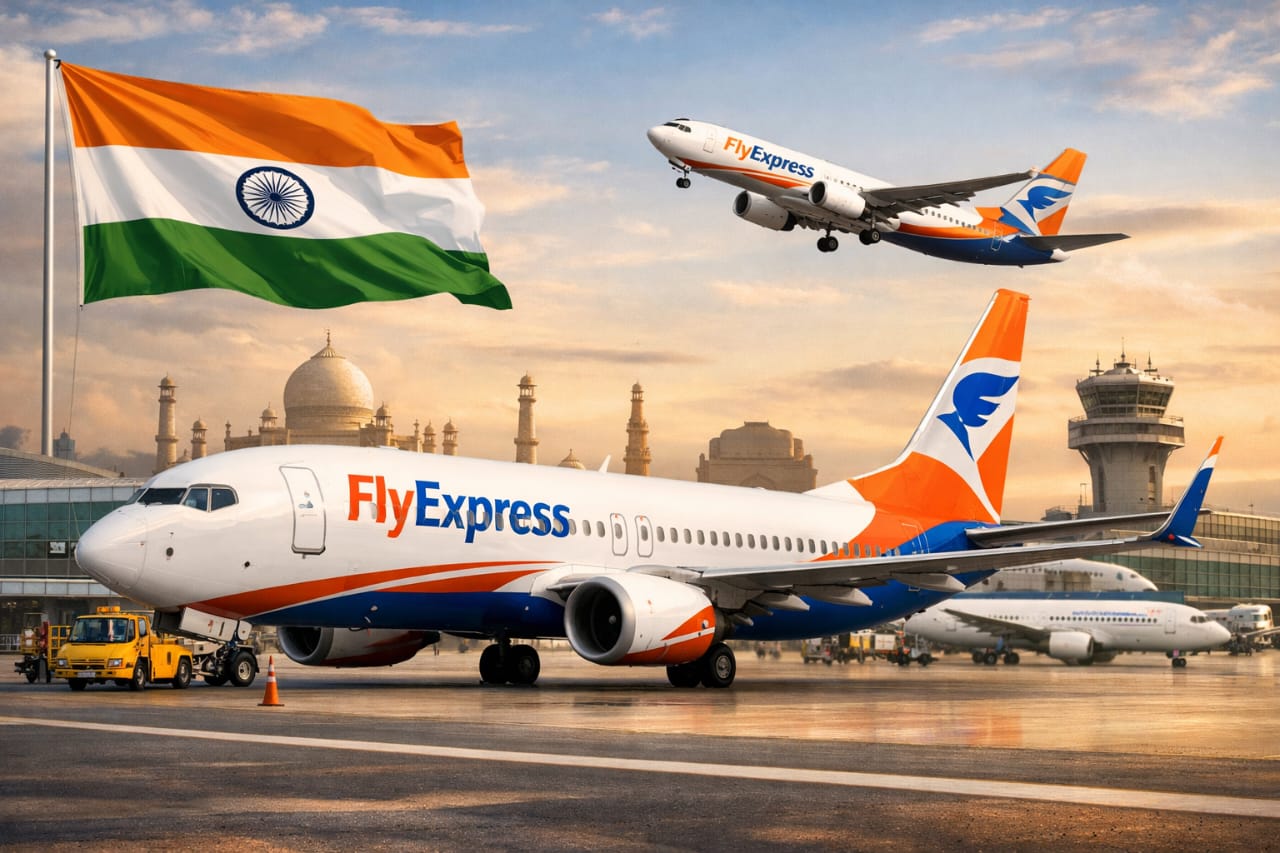
FlyExpress Airline India – Launch Date 2026, Routes, Fleet, Ownership & All Details
India’s New Aviation Player:
The Indian aviation sector is witnessing a significant transformation in 2025-26 with the entry of three new airlines approved by the Government of India. Among these, FlyExpress Airline India stands out as the most intriguing and enigmatic player. As domestic air travel continues to recover post-pandemic and passenger numbers soar, the government’s approval of new carriers aims to reduce market concentration and foster healthy competition.
FlyExpress Airline represents a unique convergence of logistics expertise and passenger aviation, backed by an established ground logistics company of the same name. While information remains limited, this comprehensive guide compiles everything known about FlyExpress Airline’s plans, potential launch date, and expected operations.
Table of Contents:
FlyExpress Airline India Ownership Structure:
Promoters and Background –
FlyExpress Airline India is promoted by Hyderabad-based FlyExpress, a well-established courier and cargo services company with extensive operations across South and Central India. The airline venture is reportedly spearheaded by Konakati Suresh, though detailed corporate structure and ownership patterns haven’t been publicly disclosed as of December 2025.

Parent Company Expertise –
The parent company’s core competencies include:
- Last-mile delivery services
- Regional cargo transportation
- Logistics network management
- Supply chain solutions across multiple states
This strong logistics foundation suggests that FlyExpress Airline India may adopt a hybrid model, potentially combining passenger operations with cargo services—a strategic advantage in India’s evolving aviation landscape.
Corporate Structure Insights –
| Aspect | Details |
|---|---|
| Parent Company | FlyExpress Logistics Pvt. Ltd. |
| Headquarters | Hyderabad, Telangana |
| Primary Promoter | Konakati Suresh |
| Industry Experience | 15+ years in logistics |
| Existing Network | 200+ cities in South/Central India |
Official Launch Date and Current Status:
Current Regulatory Status –
As of late 2025, FlyExpress Airline India has achieved the first major milestone but still faces several regulatory steps:
- Government Approval: ✅ Received initial approval from Ministry of Civil Aviation
- Air Operator Permit: ⏳ Yet to obtain from DGCA
- Scheduled Operator Status: ⏳ Pending
- Fleet Acquisition: ⏳ Not yet formalized
Expected Timeline for Operations –
Based on industry norms and regulatory processes, here’s the projected timeline:
Industry Speculation on Launch Date –
Most aviation analysts predict that FlyExpress Airline India will begin commercial operations in late 2026 or early 2027. This timeline considers:
- Typical 12-18 month process from approval to launch
- Current market conditions and aircraft availability
- Competitive landscape with other new entrants
- Infrastructure and crew readiness requirements
Official Communications –
The airline’s website currently displays a “Services will begin soon” message, indicating active preparation but no firm commitment on the FlyExpress Airline India launch date. Industry observers expect clearer announcements regarding the official FlyExpress Airline India launch date in early 2026.
Expected Routes and Network Strategy:
Initial Route Focus –
FlyExpress Airline India is expected to prioritize regional connectivity, potentially leveraging the UDAN (Ude Desh ka Aam Nagrik) scheme. The initial network may focus on:
Primary Target Regions –
- Southern Corridor: Hyderabad-Bengaluru-Chennai triangle
- Central Connectivity: Links between Telangana, Maharashtra, and Karnataka
- Regional Hubs: Connections to tier-2 and tier-3 cities
Probable Hub Strategy –
| Hub Type | Likely Airport | Rationale |
|---|---|---|
| Primary Hub | Rajiv Gandhi International Airport (HYD) | Proximity to headquarters, existing logistics infrastructure |
| Secondary Base | Kempegowda International Airport (BLR) | Strong South India connectivity, growing market |
| Focus Cities | Chennai, Mumbai, Pune | Business traffic, cargo potential |
Route Network Projections –
Based on parent company’s logistics network and market gaps, initial routes might include:
Phase 1 (Year 1):
- Hyderabad → Vijayawada
- Bengaluru → Hubli
- Chennai → Tirupati
- Mumbai → Hyderabad (with cargo capacity)
Phase 2 (Year 2-3):
- Expansion to Western India
- Increased frequency on profitable routes
- Potential international routes to Gulf/Middle East
UDAN Scheme Participation –
FlyExpress Airline India is well-positioned to participate in UDAN 5.0 and subsequent rounds, given:
- Experience in regional connectivity through logistics
- Understanding of tier-2/tier-3 city markets
- Potential for hybrid passenger-cargo operations on thinner routes
Fleet Plan and Aircraft Selection:
Expected Fleet Composition –
While no official fleet announcement has been made, industry experts predict several likely scenarios:
Short-Haul/Regional Aircraft Options:
- ATR 42/72 Series: Ideal for UDAN routes, lower operating costs
- Embraer E-Jets: Balance of range and capacity for regional routes
- Used Airbus A320 Family: Cost-effective entry into larger markets
Fleet Size Projections –
Aircraft Acquisition Strategy:
Given current market conditions, FlyExpress Airline might consider:
- Wet leasing initially to accelerate launch
- Sale-leaseback arrangements for capital efficiency
- Used aircraft market for cost-effective expansion
- Gradual transition to newer, fuel-efficient models
Cargo Configuration Considerations:
A unique aspect of FlyExpress Airline‘s potential strategy could involve:
- Combi-configuration aircraft (passenger + cargo)
- Quick-change cabins for operational flexibility
- Dedicated cargo holds on passenger flights
- Specialized freighters for overnight operations
Business Model and Market Positioning:

Hybrid Operational Model –
FlyExpress Airline India is expected to leverage its parent company’s expertise through:
Integrated Logistics-Passenger Model:
- Shared ground handling infrastructure
- Combined passenger and cargo operations
- Leveraged last-mile delivery network
- Optimized aircraft utilization through day/night operations
Target Market Segments –
| Segment | Strategy | Competitive Advantage |
|---|---|---|
| Business Travelers | Connectivity between business centers | Time-definite services, cargo facilities |
| Regional Passengers | UDAN routes, tier-2/3 connectivity | Logistics network understanding |
| Cargo Clients | Integrated air-ground solutions | Existing customer base, infrastructure |
| Price-sensitive | Competitive pricing on select routes | Operational efficiencies from hybrid model |
Competitive Positioning –
FlyExpress Airline will likely position itself as:
- Regional connectivity specialist
- Reliable and efficient operator
- Value-for-money service provider
- Logistics-integrated airline
Comparison with Other New Indian Airlines:
Market Entry Landscape 2025-26 –
The Indian aviation market is welcoming three new players simultaneously:
| Parameter | FlyExpress Airline | Shankh Air | Al-Hind Air |
|---|---|---|---|
| Headquarters | Hyderabad | Lucknow/Noida | Kozhikode |
| Backing | Logistics Company | Entrepreneur | Diversified Group |
| Expected Launch | Late 2026/Early 2027 | Q1 2026 | Early 2026 |
| Business Model | Hybrid (Likely) | Full-service | Gulf-focused LCC |
| Initial Fleet | Undisclosed | 20-25 Boeing (3-year plan) | 7 Airbus + ATR |
| Market Focus | Regional + Cargo | North/Central India | South India → Gulf |
| Public Information | Minimal | Moderate | Detailed |
Strategic Differentiation –
FlyExpress Airline India‘s potential advantages:
- Existing infrastructure from parent company
- Cargo expertise for additional revenue
- Regional market understanding
- Lower customer acquisition costs through existing logistics clients
Market Gap Analysis –
Current gaps that FlyExpress Airline could fill:
- Integrated cargo-passenger services on regional routes
- Focus on South India regional connectivity
- Logistics-backed reliability and operational expertise
- Niche services combining speed and cargo capacity
Official Website and Branding:
Digital Presence Status –
As of December 2025, FlyExpress Airline India maintains a minimal digital footprint:
Website Features:
- “Coming Soon” or “Services will begin soon” message
- Basic contact information
- Brand logo and color scheme
- No booking engine or detailed information
Expected Brand Elements –
Based on the parent company’s branding:
Likely Brand Identity:
- Colors: Possibly blue/orange combination (similar to logistics arm)
- Logo: Modern, streamlined design emphasizing speed and reliability
- Slogan: Focus on connectivity, efficiency, or regional empowerment
- Digital Strategy: Gradual rollout with focus on operational readiness first
Communication Strategy –
The limited public information suggests:
- Stealth approach to avoid premature market reactions
- Focus on regulatory milestones before marketing
- Gradual information release as operations near
- Potential surprise elements in service offerings
Impact on Indian Aviation Market:
Market Diversification Benefits –
FlyExpress Airline‘s entry could bring several positive developments:
For Consumers:
- Increased competition on regional routes
- Potential price benefits
- Enhanced connectivity options
- Innovative service combinations
For Industry:
- Diversification of airline ownership models
- Integration of logistics and passenger aviation
- New operational approaches
- Technology and process innovations
Regional Development Impact –
Specific benefits for regional connectivity:
- Improved air links for tier-2 and tier-3 cities
- Economic development through better connectivity
- Tourism growth in underserved regions
- Business connectivity enhancements
Competitive Dynamics –
FlyExpress Airline India‘s entry could:
- Pressure existing carriers on regional routes
- Introduce new service standards
- Force operational efficiencies across industry
- Accelerate innovation in ancillary services
Challenges and Opportunities:
Key Challenges Ahead –
Regulatory Hurdles:
- DGCA certification process
- Safety compliance requirements
- Slot allocation at congested airports
- Bilateral rights for future international expansion
Market Challenges:
- High capital requirements
- Established competition from incumbents
- Price-sensitive market
- Brand building from scratch
- Fuel price volatility
- Currency exchange risks
Operational Challenges:
- Crew recruitment and training
- Maintenance infrastructure
- Technology integration
- Cargo-passenger operational balance
Significant Opportunities –
Market Opportunities:
- Growing regional travel demand
- UDAN scheme support
- E-commerce cargo growth
- Under-served city-pair markets
Strategic Advantages:
- Existing logistics infrastructure
- Parent company’s operational experience
- Potential for innovative business models
- First-mover advantage in hybrid operations
Economic Factors:
- Growing Indian middle class
- Increasing business travel
- Government infrastructure investments
- Digital adoption in smaller cities
Future Outlook and Timeline:
Short-term (2026) –
Expected Milestones:
- Q1 2026: DGCA application submission
- Q2 2026: First aircraft order/lease announcement
- Q3 2026: Crew recruitment commencement
- Q4 2026: Test flights and certification
Medium-term (2027-2028) –
Growth Projections:
- Fleet expansion to 6-8 aircraft
- Route network covering 15-20 cities
- Potential international operations start
- Brand establishment in regional markets
Long-term (2029-2030) –
Strategic Goals:
- 15-20 aircraft fleet
- National presence with regional focus
- Strong cargo business integration
- Potential IPO or strategic partnerships
Success Factors –
Critical elements for FlyExpress Airline India‘s success:
- Strategic focus on profitable niches
- Operational efficiency from day one
- Capital management and cost control
- Customer experience differentiation
- Adaptability to market changes
Frequently Asked Questions {#FaQ}
Q1: What is FlyExpress Airline?
A: FlyExpress Airline is one of three new airlines approved by the Indian government in 2025, backed by an established Hyderabad-based logistics company of the same name.
Q2: Who owns FlyExpress Airline?
A: The airline is promoted by FlyExpress Logistics Pvt. Ltd., reportedly led by Konakati Suresh, though detailed ownership structure hasn’t been publicly disclosed.
Q3: When will FlyExpress Airline start operations?
A: While no official date is announced, industry analysts expect operations to begin in late 2026 or early 2027, following regulatory approvals and operational preparations.
Q4: What will be FlyExpress Airline’s main routes?
A: Initial routes are expected to focus on regional connectivity in South and Central India, potentially including Hyderabad, Bengaluru, Chennai, and tier-2 cities under the UDAN scheme.
Q5: What type of aircraft will FlyExpress Airline use?
A: While not officially confirmed, the airline is likely to start with turboprops like ATR 42/72 or used Airbus A320 family aircraft for cost efficiency.
Q6: How is FlyExpress Airline different from other new airlines?
A: FlyExpress has a unique logistics background, potentially enabling a hybrid passenger-cargo model, unlike Shankh Air (full-service) or Al-Hind Air (Gulf-focused).
Q7: Will FlyExpress Airline offer international flights?
A: Initially, the focus will be domestic, but international expansion to nearby destinations like the Gulf could follow in subsequent years.
Q8: Where will FlyExpress Airline be based?
A: Rajiv Gandhi International Airport, Hyderabad is the probable primary hub and operational base.
Q9: How can I book tickets on FlyExpress Airline?
A: Booking will likely be available through their website (once operational), travel portals, and airport counters once services begin.
Q10: What business model will FlyExpress Airline follow?
A: Expected to be a hybrid model combining low-cost passenger services with cargo operations, leveraging parent company’s logistics expertise.
About the Author