Shankh Air Owner’s Unbelievable Journey
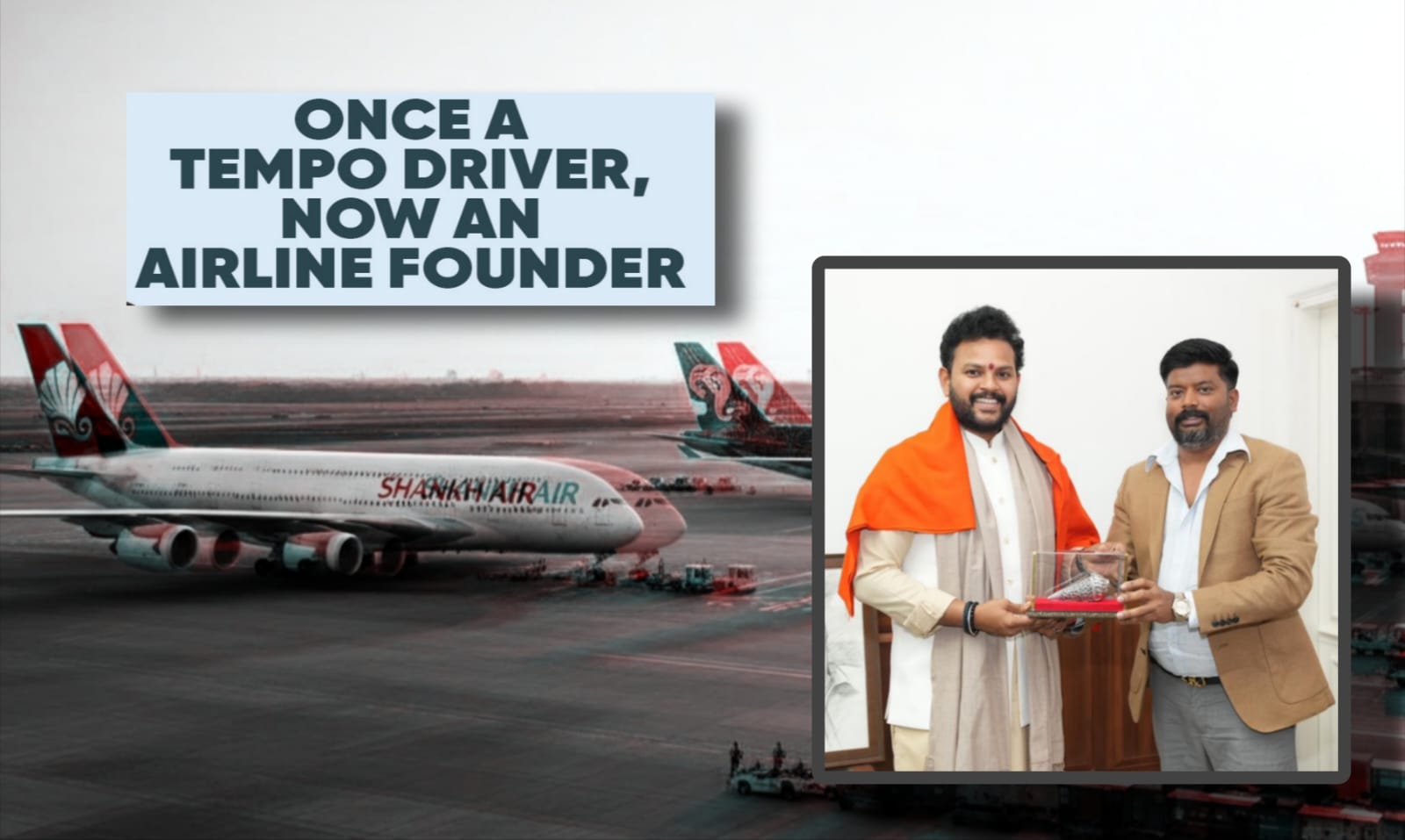
The story of Shankh Air Owner Shravan Kumar Vishwakarma, is not just about aviation—it is about ambition, resilience, and redefining what is possible in modern India. From driving tempos on the streets of Kanpur to launching one of India’s newest domestic airlines, Vishwakarma’s journey stands as one of the most remarkable entrepreneurial transformations of the decade.
As India prepares to welcome Shankh Air into its crowded aviation market in 2026, curiosity around its founder has grown rapidly. Who is the man behind the airline? How did someone from a modest background enter one of the most capital-intensive industries in the world? And what does Shankh Air mean for India’s aviation future?
This is the complete story of the Shankh Air owner—from the ground up.
Who Is the Shankh Air Owner?
The Shankh Air owner is Shravan Kumar Vishwakarma, a 35-year-old entrepreneur from Kanpur, Uttar Pradesh. Unlike most airline founders who emerge from elite corporate or aviation backgrounds, Vishwakarma’s roots lie in informal labor and small-scale transport work.
Born into a middle-class family, Vishwakarma spent his early years struggling to find direction. Academics did not interest him, and financial limitations meant survival took priority over ambition. He worked as:
- A loader
- An auto-rickshaw driver
- A tempo driver
These early experiences shaped his understanding of transport, logistics, and the movement of people—knowledge that would later become the foundation of his aviation dream.
From Survival to Strategy: Early Life in Kanpur
Growing up in Kanpur, Vishwakarma witnessed transportation at its most basic level—bicycles, buses, tempos, and trucks. He often describes this phase as his real education.
“When you come from the bottom, you don’t see transport as luxury. You see it as necessity,” he has said in interviews.
The Shankh Air owner did not start with a grand vision of aviation. For years, he experimented with small businesses, many of which failed. But each failure sharpened his instincts.
The Turning Point: 2014 Cement Business Opportunity
In 2014, Vishwakarma’s entry into the cement business marked a significant turning point. This sector offered the stability and demand he needed for expansion. Key milestones in this venture included:
- Establishing Supplier Networks: Building connections that were pivotal for the supply chain.
- Understanding Logistics: Gaining experience in large volume transportation.
- Generating Steady Cash Flow: Ensuring financial stability to explore further opportunities.
This success in cement opened doors to diversification. Over the next few years, he expanded his portfolio into other areas.
Expanding Horizons: Steel, Mining, and Transport Ventures
Following his successful foray into cement, Vishwakarma ventured into:
- TMT Steel: Rebar manufacturing and distribution.
- Mining Operations: Broadened his business landscape.
- Commercial Transport: Created one of the largest privately owned transport networks in his region with a fleet of over 400 trucks.
These successes transformed him from a small trader into a serious industrialist. The profits from these ventures eventually became the financial backbone behind Shankh Air.
How the Idea of Shankh Air Was Born ?
Around 2019, Vishwakarma began thinking beyond roads.
The Shankh Air owner has often said that flying should not be viewed differently from buses or trains.
“An aircraft is just another mode of transport. Why should it be exclusive?”
This belief planted the seed for Shankh Air—an airline designed to serve middle-class passengers and first-time flyers, especially from Uttar Pradesh.
Studying Aviation From Scratch:
Starting an airline is among the most complex businesses in the world. For nearly four years, Vishwakarma studied:
- Civil aviation regulations
- Aircraft leasing models
- DGCA compliance
- Route economics
- Crew and maintenance structures
Unlike many startups, the Shankh Air owner avoided shortcuts. He focused on regulatory readiness before public announcements.
Regulatory Milestone: NOC Approval
One of the biggest achievements in the Shankh Air journey came when the airline received a No Objection Certificate (NOC) from the Ministry of Civil Aviation.
This placed Shankh Air alongside other new entrants like:
- Al Hind Air
- FlyExpress
The approval signaled government confidence in the airline’s financial and operational preparedness.
Shankh Air Launch Timeline and Fleet Plans:
Shankh Air is expected to begin operations in early 2026, with initial flights likely starting in January 2026.
Initial Operational Plan –
| Category | Details |
|---|---|
| Founder | Shravan Kumar Vishwakarma |
| Airline Name | Shankh Air |
| Owner | Shankh Aviation |
| Launch Year | 2026 |
| Initial Fleet | 3 Airbus aircraft |
| First Routes | Lucknow–Delhi, Mumbai, metros |
| Expansion Focus | Uttar Pradesh connectivity |
The airline plans to gradually scale its fleet to 20–25 aircraft over the next few years.
Why Uttar Pradesh Is Central to Shankh Air ?
For the Shankh Air owner, Uttar Pradesh is not just a market—it is home.
Despite being India’s most populous state, UP remains under-served in aviation connectivity. Shankh Air aims to:
- Strengthen intra-state routes
- Improve access from Tier-2 and Tier-3 cities
- Support regional economic growth
This aligns closely with India’s UDAN scheme, which encourages regional air travel.
Affordable Flying: The Core Philosophy –
Shravan Vishwakarma’s aviation philosophy is simple: flying should be normal, not aspirational.
Shankh Air’s approach includes:
- Competitive economy fares
- Stable ticket pricing during festivals
- Premium pricing limited to business class
- Focus on operational efficiency
The Shankh Air owner believes price predictability builds long-term trust, especially among first-time flyers.
Breaking India’s Aviation Duopoly:
India’s domestic aviation market is dominated by:
- IndiGo
- Air India Group
Together, they control over 90% of market share.
The entry of Shankh Air represents:
- Increased competition
- More pricing discipline
- Better service innovation
For policymakers, new airlines like Shankh Air signal a healthier, more balanced aviation ecosystem.
Long-Term Vision: International Operations –
The ambitions of the Shankh Air owner do not stop at domestic skies.
Planned Expansion Roadmap:
- 2026–27: Domestic consolidation
- 2028–29: Short-haul international routes
- Focus regions: Middle East, South Asia
International expansion will depend on fleet growth and bilateral traffic rights.
Why Shankh Air Is More Than a Business ?
Shankh Air represents:
- Social mobility
- Regional entrepreneurship
- Decentralization of Indian aviation
For millions in small towns, the Shankh Air owner’s story is proof that elite industries are no longer closed clubs.
Key Lessons From the Shankh Air Owner’s Journey:
- Start where you are – Vishwakarma began with transport, not aviation
- Build capital patiently – Profits from steel and cement funded aviation
- Learn before launching – Four years of preparation
- Solve a real problem – Affordable, regional air travel
- Stay rooted – UP remains central to Shankh Air’s mission
Frequently Asked Questions (FAQ):
Who is the Shankh Air owner?
The Shankh Air owner is Shravan Kumar Vishwakarma, an entrepreneur from Kanpur, Uttar Pradesh.
What was Shravan Vishwakarma’s background?
He worked as a loader, auto driver, and tempo driver before entering business.
When will Shankh Air start operations?
Shankh Air is expected to launch flights in January 2026.
Which aircraft will Shankh Air use?
The airline will begin with three Airbus aircraft.
What routes will Shankh Air operate first?
Initial routes include Lucknow to Delhi, Mumbai, and other metro cities.
Is Shankh Air focused on low-cost travel?
Yes, affordable air travel for middle-class passengers is central to its strategy.
Conclusion: A New Chapter in Indian Aviation
The rise of the Shankh Air owner from tempo driver to airline founder is not just inspirational—it is transformational. It challenges long-held assumptions about who can build large enterprises in India.
As Shankh Air prepares for take-off, it carries more than passengers. It carries the aspirations of a new India—where ambition is not limited by background, and where even the sky is no longer the limit.
Who Owns FlyExpress? The Real Story Behind India’s New Airline Approved by Govt
About the Author