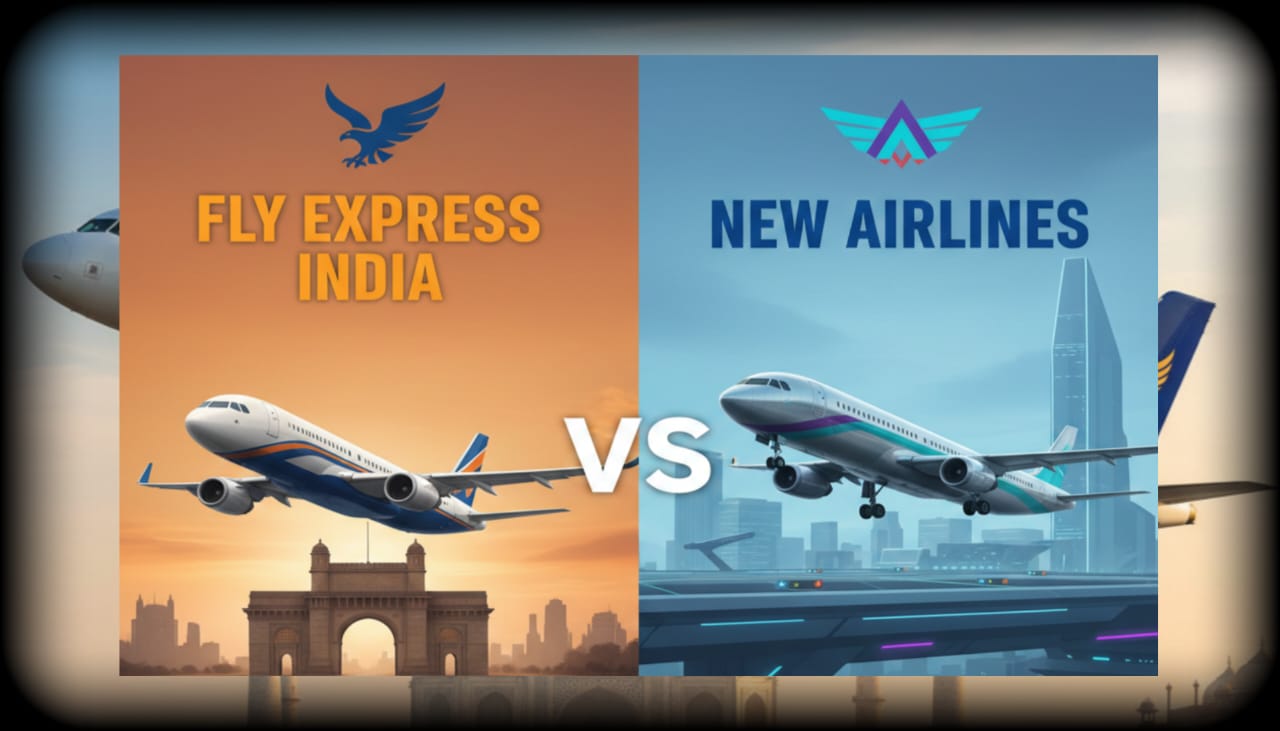
Fly India Express vs Other New Airlines: Who Will Win India’s Aviation Race?
Why New Airlines Matter in India’s Aviation Boom:
India’s aviation sector is undergoing one of the most dramatic expansions in the world. Rising disposable incomes, regional connectivity schemes, and post-pandemic travel demand have opened the skies to a new generation of airlines. Among these emerging carriers, Fly India Express has attracted significant attention for its aggressive pricing strategy and focus on underserved routes.
This in-depth guide on Fly India Express vs Other New Airlines compares India’s newest aviation players across business models, fleet strategy, pricing, routes, passenger experience, sustainability, and long-term viability—helping travelers, investors, and industry observers understand who is best positioned to succeed.
The Evolving Indian Aviation Landscape:
India is now the third-largest domestic aviation market globally and is expected to rank among the top three overall aviation markets within the decade. Several factors are driving this growth:
- Expansion of Tier 2 and Tier 3 cities
- Government support through UDAN and airport privatization
- Rising middle-class travel demand
- Improved aircraft efficiency and leasing availability
This environment has encouraged the entry of new low-cost, regional, and hybrid airlines, each targeting a different slice of the market.
Market Entry Timeline: New Airlines in India (2020–2025)
| Airline Name | Launch Status | Base Hub | Planned Fleet | Core Focus |
|---|---|---|---|---|
| Fly India Express | Proposed | Delhi NCR | 12 aircraft | Tier 2 & Tier 3 connectivity |
| Akasa Air | Operational | Mumbai | 20+ aircraft | Metro + Tier 2 routes |
| Jet Airways (2.0) | Relaunched | Delhi | 5 aircraft | Premium & business travel |
| IndiaOne Air | Proposed | Bengaluru | 8 aircraft | Regional routes |
| FlyBig | Operational | Indore | 6 aircraft | UDAN & short-haul |
Table 1: New airline entrants reshaping Indian aviation
Fly India Express: Business Model and Core Strategy
Fly India Express positions itself as a pure low-cost airline with a mission to make air travel affordable for passengers who traditionally depend on trains and buses.
Key Strategic Pillars –
- Primary Hub: Delhi NCR
- Secondary Hubs: Eastern & Southern India (planned)
- Aircraft Type: Airbus A320neo
- Operating Model: Hub-and-spoke
- Target Passenger: Price-sensitive domestic travelers
Strategic Advantages –
- Lower operating costs through fleet uniformity
- Use of secondary airports with reduced charges
- Faster aircraft turnaround times
- Digital-first ticket sales and mobile incentives
Fly India Express vs Other New Airlines: Fleet Comparison –
Projected Fleet Size (Year 1) –
Fly India Express | ██████████ (12)
Akasa Air         | ████████████████████ (20)
Jet Airways 2.0   | ██████ (5)
IndiaOne Air      | ████████ (8)
FlyBig            | ███████ (6)
Insight: While Akasa Air leads in scale, Fly India Express balances growth and cost control with a modern fleet size ideal for regional expansion.
Route Network Strategy Comparison:
| Aspect | Fly India Express | Akasa Air | Jet Airways 2.0 | FlyBig |
|---|---|---|---|---|
| Primary Focus | Tier 2 & 3 cities | Metro + Tier 2 | Business routes | Regional |
| Average Route Length | 1,200 km | 1,500 km | 1,800 km | 600 km |
| International Expansion | Phase 2 | Phase 2 | Immediate | None |
| Hub Strategy | Multiple hubs | Single hub | Dual hub | Single hub |
| Codeshare Plans | Exploring | Yes | Legacy revival | No |
Table 2: Route and connectivity strategy
Fly India Express vs Other New Airlines shows a clear distinction—Fly India Express avoids congested metro routes initially, focusing instead on underserved city pairs.
Pricing Strategy: Who Offers the Best Value ?
Average Base Fare per 1,000 km (INR) –
| Airline | Fare Range |
|---|---|
| Fly India Express | ₹2,800 – ₹3,200 |
| Akasa Air | ₹3,200 – ₹3,800 |
| IndiaOne Air | ₹3,000 – ₹3,500 |
| FlyBig | ₹3,500 – ₹4,200 |
| Jet Airways 2.0 | ₹4,500 – ₹5,500 |
Conclusion: Fly India Express is the most price-aggressive among new airlines, aiming to stimulate first-time flyers.
Passenger Experience & Service Comparison:
| Feature | Fly India Express | Akasa Air | Jet Airways 2.0 | FlyBig |
|---|---|---|---|---|
| Seat Pitch | 29” | 30” | 32” | 28” |
| Complimentary Meals | No | Buy-on-board | Yes | No |
| Entertainment | BYOD streaming | BYOD | Seatback screens | None |
| Wi-Fi | No | Planned | Yes (select routes) | No |
| Loyalty Program | Basic | Advanced | Legacy revival | None |
Table 3: In-flight experience comparison
Fly India Express prioritizes low fares over frills, while Jet Airways 2.0 targets premium travelers.
Market Impact: How New Airlines Are Disrupting India’s Aviation Giants
Domestic Market Share Projection (Year 2) –
- IndiGo: 55% (↓ from 58%)
- Air India Group: 26% (↑ from 24%)
- New Airlines Combined: 12% (↑ from 3%)
- Others: 7%
This indicates rising pressure on incumbents due to new-age carriers like Fly India Express.
SWOT Analysis: Fly India Express vs Competitors
Fly India Express:
Strengths –
- Ultra-competitive pricing
- Underserved route focus
- Fuel-efficient aircraft
Weaknesses –
- New brand with low recall
- Thin margins
- High dependency on load factors
Akasa Air:
- Strong financial backing
- Experienced leadership
- Metro competition pressure
Jet Airways 2.0:
- Brand recognition
- High operating costs
- Premium market risk
FlyBig:
- Regional expertise
- Limited scalability
Financial Sustainability: What Determines Survival ?
Key success metrics for new airlines include:
- Passenger Load Factor: Target >80%
- Cost per Available Seat Kilometer (CASK)
- Ancillary Revenue Share: 20–30%
- Capital Reserves: Minimum 24 months runway
- Operational Reliability: OTP above 85%
Fly India Express’s low-cost model gives it an early advantage—but discipline is critical.
Environmental Impact & Sustainability:
Carbon Emissions (grams per passenger km) –
| Airline | Emissions |
|---|---|
| Fly India Express (A320neo) | 75g |
| Akasa Air (B737 MAX) | 78g |
| Jet Airways 2.0 | 92g |
| Industry Average | 90g |
Newer airlines enjoy a clear sustainability edge, helping future regulatory compliance.
Technology & Digital Innovation:
| Airline | Digital Focus |
|---|---|
| Fly India Express | AI pricing, mobile-only deals |
| Akasa Air | Biometrics, super-app |
| Jet Airways 2.0 | Premium digital lounges |
| FlyBig | Simplified booking |
Technology adoption is a major differentiator in Fly India Express vs Other New Airlines.
Challenges Ahead for New Airlines:
- Airport slot constraints
- Pilot and crew shortages
- ATF price volatility
- Currency fluctuations
- Policy and regulatory shifts
Only airlines with strong capital backing and lean operations will survive.
Passenger Benefits: Why Flyers Win ?
- 15–25% lower fares on competitive routes
- Direct connectivity to smaller cities
- More schedule options
- Faster adoption of digital services
- Improved loyalty rewards
Frequently Asked Questions (FAQ):
Q1. When will Fly India Express start operations?
Fly India Express is expected to launch operations after final DGCA approvals, likely within the next operational window.
Q2. Is Fly India Express cheaper than Akasa Air?
Yes. Current projections show Fly India Express offering lower base fares, especially on Tier 2 and Tier 3 routes.
Q3. Is Fly India Express safe to fly?
Yes. All Indian airlines must comply with DGCA safety standards, regardless of size or age.
Q4. How is Fly India Express different from IndiGo?
Fly India Express focuses on underserved routes and ultra-low fares, while IndiGo dominates high-frequency metro routes.
Q5. What happens if a new airline shuts down?
DGCA guidelines require passenger accommodation on alternate carriers, though delays may occur.
Future Outlook (2025–2030):
- Consolidation through mergers
- Specialization by market segment
- Expansion into short-haul international routes
- Increased use of biofuels
- AI-driven pricing and operations
Conclusion: Who Wins in Fly India Express vs Other New Airlines?
The comparison of Fly India Express vs Other New Airlines highlights a clear truth—India’s aviation future belongs to airlines that balance low costs, smart route selection, operational efficiency, and customer trust.
Fly India Express has a strong strategic foundation, but long-term success will depend on execution, reliability, and financial resilience. For travelers, the rise of these new airlines means more choice, better connectivity, and cheaper flights—a win for India’s growing aviation ecosystem.
Who Owns FlyExpress? The Real Story Behind India’s New Airline Approved by Govt
About the Author