Are Tariffs Good for the Economy? Are They Good or Bad for Prices, Jobs, and Growth?
Tariffs have returned to the center of global economic debate in a way few policy tools ever do. Once viewed as a technical issue reserved for trade negotiators and economists, tariffs are now shaping prices at grocery stores, influencing interest-rate decisions, and redefining relationships between nations.
As governments increasingly turn to tariffs for revenue, leverage, and industrial strategy, a pressing question dominates headlines and dinner-table conversations alike: Are tariffs good or bad? More specifically, are tariffs good for the economy, or do they create more harm than benefit?
The answer, as with most economic policies, is complex. This in-depth analysis examines how tariffs work, who pays the price, who benefits, and whether modern tariff strategies actually deliver on their promises.
Table of Contents:
What Are Tariffs and Why Do Governments Use Them?
A tariff is a tax imposed on imported goods. When a product crosses a border, the importing country charges a fee—either as a percentage of the product’s value or as a fixed amount per unit.
Historically, tariffs served two main purposes:
- Raising government revenue
- Protecting domestic industries from foreign competition
In the United States, tariffs were the primary source of federal revenue for more than a century, until the income tax was introduced in 1913. Today, tariffs have re-emerged not only as a trade tool but also as a fiscal and geopolitical instrument.
How Tariffs Affect Prices: From Port to Paycheck
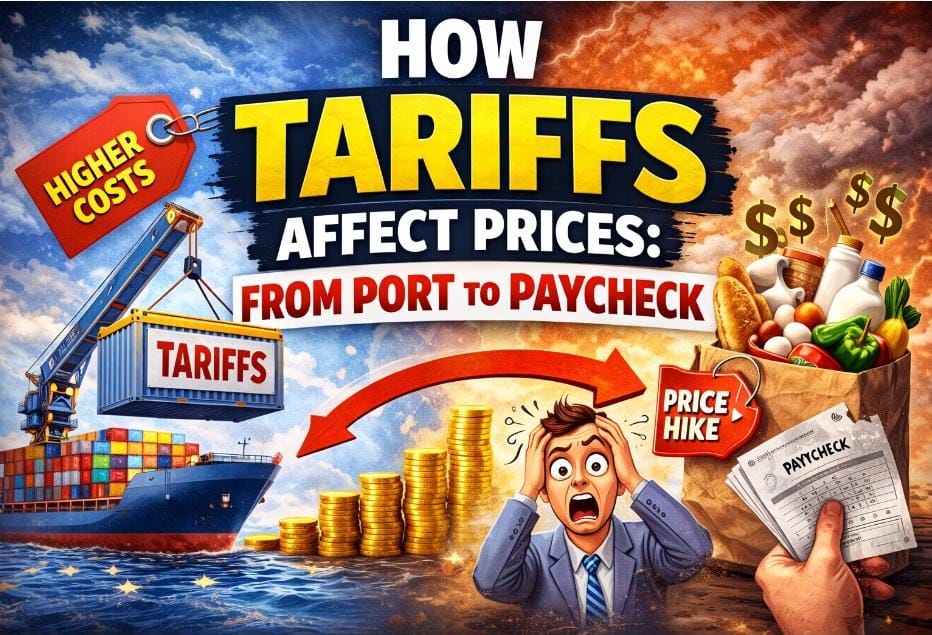
One of the most common concerns behind the question “Are Tariffs Good or Bad?” is their impact on consumer prices.
How Tariffs Reach Consumers?
Tariffs rarely stay confined to ports or customs offices. Instead, they move through the economy in predictable ways:
- Imported consumer goods become more expensive at retail
- Domestic products using imported components face higher production costs
- Businesses pass costs forward to protect profit margins
- Consumers ultimately pay more, often without realizing tariffs are the cause
With the suspension of long-standing low-value import exemptions in 2025, even small purchases are now subject to tariffs—broadening their reach into everyday spending.
Are Tariffs Good for the Economy? The Case in Favor
Supporters argue that tariffs play a constructive role when used strategically. From this perspective, are tariffs good for the economy? Sometimes—under specific conditions.
Potential Benefits of Tariffs –
| Benefit | Explanation |
|---|---|
| Protection of Domestic Industry | Tariffs make imported goods more expensive, allowing local producers to compete |
| Government Revenue | Tariffs raise funds without directly taxing income or wages |
| Trade Leverage | Tariffs can pressure other nations into negotiations |
| Strategic Security | Certain industries (steel, semiconductors) may benefit from insulation |
Proponents argue tariffs can buy time for domestic industries to modernize, invest, and rebuild capacity—especially in sectors critical to national security.
Are Tariffs Good or Bad? The Case Against Them
Critics counter that while tariffs may help select industries, they impose widespread costs across the economy.
Key Drawbacks of Tariffs –
| Drawback | Economic Impact |
|---|---|
| Higher Consumer Prices | Inflationary pressure spreads beyond imports |
| Retaliation from Trade Partners | Exporters face new foreign barriers |
| Supply Chain Disruption | Costs rise across interconnected industries |
| Reduced Efficiency | Less competition can protect inefficiency |
From this view, the answer to “Are tariffs good or bad?” leans toward bad for overall economic welfare, especially in highly integrated global markets.
The Modern Economy Problem: Nothing Is Truly “Made at Home”
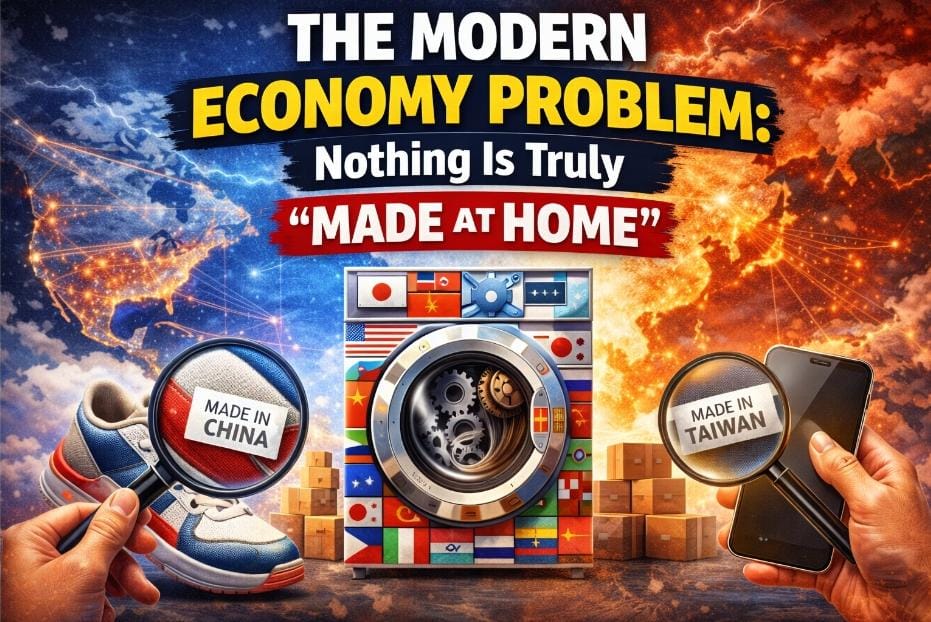
A major complication in evaluating are tariffs good for the economy lies in the structure of modern production.
Today:
- Cars include parts from multiple countries
- Electronics rely on global chip fabrication
- Even “Made in USA” goods often depend on imported inputs
Tariffs imposed on intermediate goods raise costs for domestic manufacturers, sometimes making them less competitive than before.
Why Reshoring Is Hard?
- U.S. labor costs are higher
- Factory construction requires long timelines
- Tariff policies can change with elections
- Investors hesitate amid uncertainty
As a result, tariffs often redirect supply chains rather than fully bringing production home.
Do Tariffs Cause Inflation?
Inflation is one of the most debated consequences in discussions of are tariffs good for the economy or Bad?
How Tariffs Can Drive Inflation –
- Import costs rise
- Businesses increase prices
- Consumer inflation ticks upward
- Central banks respond with tighter policy
- Economic growth slows
While inflation may not spike immediately, economists warn tariff-driven price increases can emerge gradually and persist.
The Revenue Argument: Why Tariffs Are Politically Attractive
One reason tariffs endure—even amid criticism—is their revenue power.
Tariff Revenue Snapshot –
| Metric | Recent Estimate |
|---|---|
| Annual customs revenue | Hundreds of billions |
| Share of GDP | Over 1% |
| Long-term projections | Trillions over a decade |
Once governments rely on tariff revenue, removing them becomes politically difficult. Any rollback must be offset by:
- Higher taxes
- Spending cuts
- Increased deficits
This makes tariffs “sticky” policies, regardless of economic efficiency.
Q&A: Are Tariffs Good for the Economy in Practice?
Q: Can tariffs reduce the trade deficit?
A: Yes, but primarily by suppressing imports rather than boosting exports. Recent projections suggest tariffs might narrow the goods-trade gap by approximately 0.4% of GDP by 2028.
Q: Do tariffs boost domestic manufacturing?
A: Evidence remains mixed. While intended to encourage reshoring, tariffs also:
- Increase costs of imported capital equipment
- Create policy uncertainty that discourages long-term investment
- Often face foreign retaliation that harms U.S. exporters
Q: Are tariffs effective negotiating tools?
A: They create leverage but have shown limited success in opening foreign markets. Recent trade deals have focused more on damage control than market expansion for U.S. firms.
Q: Who ultimately pays for tariffs?
A: While importers initially pay tariffs, most economic analysis concludes that consumers bear the majority of the cost through higher prices, either immediately or over time.
Historical Comparison: Tariffs Then vs Now
Comparison: Historical vs. Modern Tariff Approaches
| Era | Primary Purpose | Typical Rates | Economic Context |
|---|---|---|---|
| 18th-19th Century | Government revenue | Variable, often high | Pre-income tax; industrializing economy |
| Post-WWII | Protection for specific industries | Generally declining | Bretton Woods system; globalization rise |
| 21st Century (Pre-2017) | Limited protection, dispute resolution | Low, with exceptions | Deep global supply chains; WTO framework |
| Current Approach | Revenue, leverage, industrial policy | 10% universal + targeted higher rates | Geopolitical competition; industrial policy resurgence |
Sector-by-Sector Impact: Who Wins and Loses?
Industries Most Affected by Tariffs –
| Sector | Net Effect |
|---|---|
| Consumer Electronics | Higher prices |
| Automotive | Mixed outcomes |
| Agriculture | Export losses |
| Steel & Aluminum | Price support |
| Pharmaceuticals | Rising costs |
Tariffs often create concentrated benefits and diffuse costs, complicating political debates.
Global Reactions and Retaliation:
When one country raises tariffs, others rarely stay silent. Retaliation often targets politically sensitive exports, such as agriculture or manufactured goods, increasing uncertainty for exporters.
Instead of reshoring, supply chains often:
- Shift to tariff-exempt countries
- Become longer and more complex
- Increase logistical costs
The Big Question Revisited: Are Tariffs Good or Bad?
So, are tariffs good or bad?
The most accurate answer is: they depend on what you value most.
Tariffs Are “Good” If You Prioritize:
- Government revenue
- Short-term industry protection
- Strategic leverage
Tariffs Are “Bad” If You Prioritize:
- Low consumer prices
- Economic efficiency
- Stable global trade relationships
From a macroeconomic perspective, most economists agree tariffs reduce overall welfare, even if they serve political or strategic goals.
What Comes Next?
Looking ahead, several factors will shape whether tariffs expand or retreat:
- Trade negotiations
- Inflation trends
- Government budget needs
- Geopolitical competition
What seems clear is that tariffs are no longer temporary tools—they are becoming a structural feature of modern economic policy.
Strategic Implications for Businesses and Consumers
Adaptation Strategies for the New Trade Environment
For Businesses:
- Diversify supply chains rather than waiting for policy reversals
- Leverage USMCA rules for North American production
- Build scenario analysis into strategic planning for policy flexibility
- Consider pricing strategies that account for potential long-term tariff costs
For Consumers:
- Expect higher prices on a wide range of goods, both imported and domestic
- Look for sourcing shifts as companies adapt supply chains
- Consider product alternatives that might be less tariff-affected
Final Verdict:
The debate over are tariffs good for the economy or Bad? is not going away.
Tariffs are powerful, blunt instruments. They can protect, punish, fund, and influence—but rarely without cost. While they may serve specific political or fiscal objectives, the broader economic record suggests that tariffs are not universally good for the economy, especially over the long term.
Their true impact lies not in theory, but in how societies balance competing priorities: affordability versus protection, efficiency versus sovereignty, and short-term gains versus long-term growth.
As tariffs continue to reshape global trade, one thing is certain—the question “are tariffs good for the economy?” will remain one of the defining economic debates of our time.
About the Author